
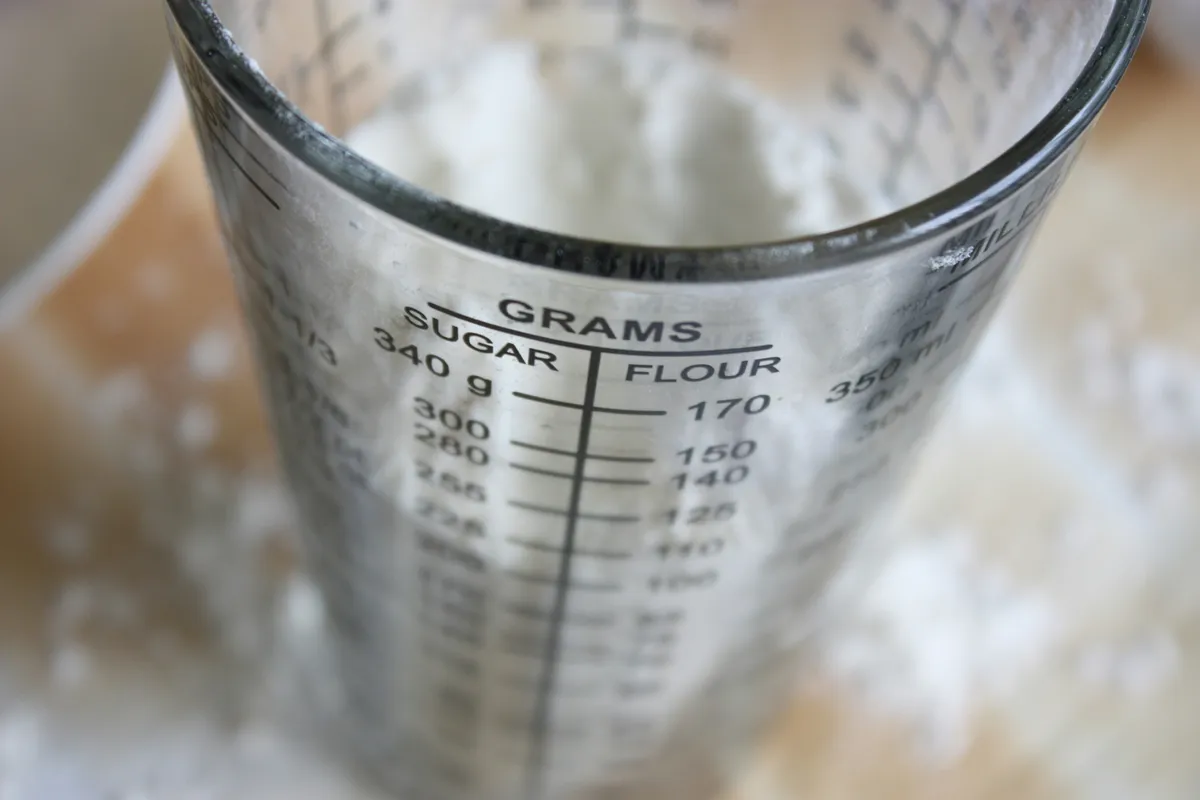
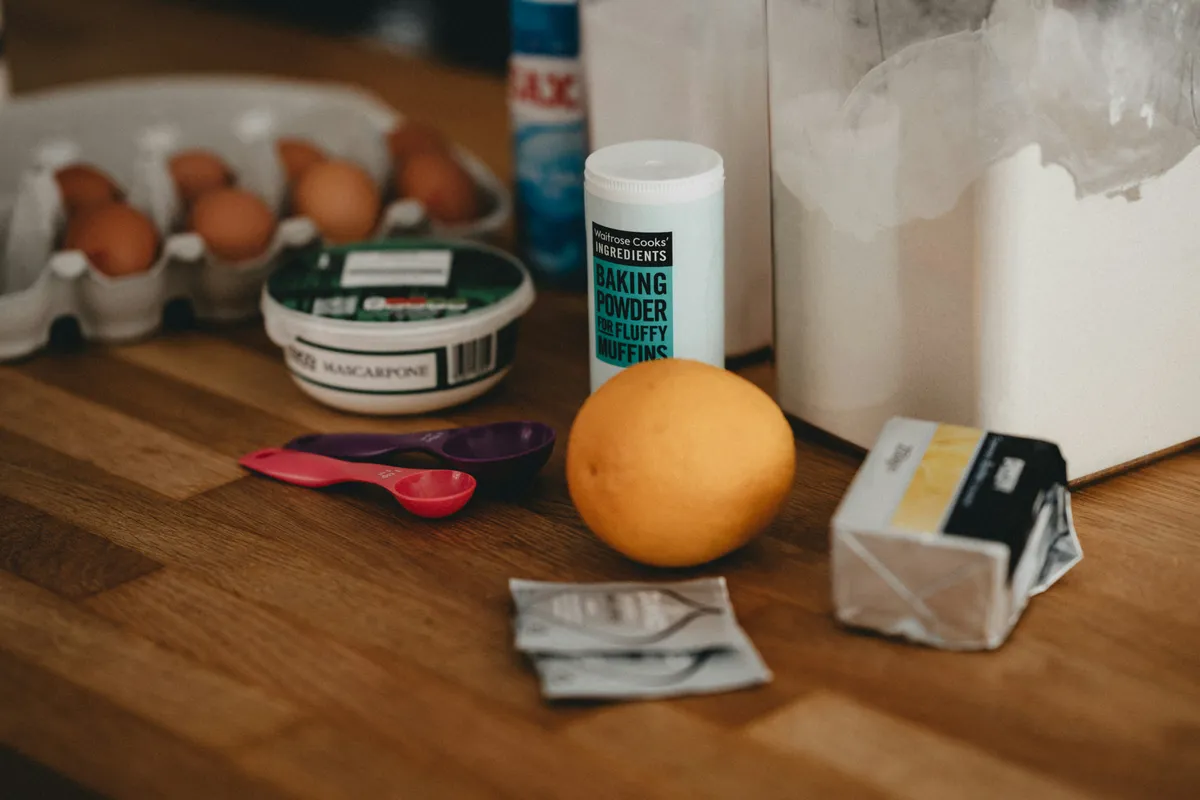
It's 8 p.m., the muffin batter is half mixed, and the carton you thought was buttermilk is empty. Do you drive to the store? Usually not. Most baking gaps have a fix with a tested ratio.
I haven't run these swaps in a test kitchen myself, so everything below is lifted from sources that did or that set the standard: King Arthur Baking's published charts and swap guides, NIST's kitchen measurement pages, a Which? oven table and the FDA. Where they disagree, I say so.
TL;DR: Weigh flour at 120 g per cup. Buttermilk is 1 tablespoon of lemon juice or vinegar plus milk to 1 cup. Baking powder is 1/4 tsp baking soda, 1/2 tsp cream of tartar and 1/4 tsp cornstarch. 350F is 180C, gas mark 4, or about 160C with the fan on.
Why Cups Fail Before Recipes Do
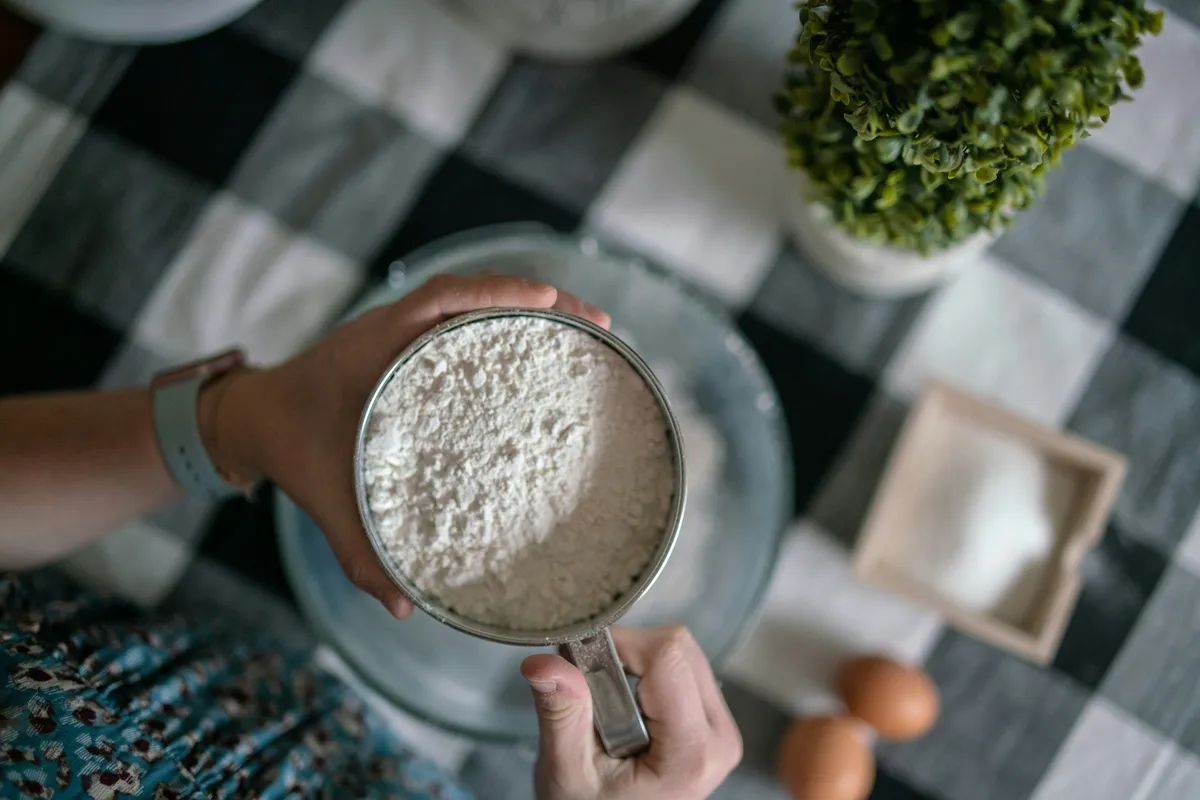
A cup of flour isn't a fixed amount. King Arthur says a densely packed cup of all-purpose can hold up to 160 grams, while their fluff, spoon and level method lands around 120. That's a third more flour from the same cup.
NIST puts it bluntly: measuring by mass on a kitchen scale is a best practice for accuracy. Its household table rounds a cup to 240 mL, a tablespoon to 15 mL and a teaspoon to 5 mL. The exact US customary cup is about 236.6 mL, close enough that the rounding won't hurt you.
Here's what the common ingredients weigh, straight from King Arthur's ingredient weight chart:
| Ingredient | Volume | Grams |
|---|---|---|
| All-purpose flour | 1 cup | 120 |
| Bread flour | 1 cup | 120 |
| Whole wheat flour | 1 cup | 113 |
| Granulated sugar | 1 cup | 198 |
| Brown sugar, packed | 1 cup | 213 |
| Confectioners' sugar, unsifted | 1 cup | 113 |
| Butter | 8 tablespoons (1/2 cup) | 113 |
| Unsweetened cocoa | 1/2 cup | 42 |
| Milk | 1 cup | 227 |
| Honey | 1 tablespoon | 21 |
| Cornstarch | 1/4 cup | 28 |
| Baking powder | 1 teaspoon | 4 |
| Table salt | 1 tablespoon | 18 |
| Large egg | 1 | 50 |
Notice sugar. A cup of granulated weighs 65% more than a cup of flour, so "a cup is a cup" breaks the moment you convert a recipe to grams by volume alone. My sourdough guide works entirely in grams for exactly this reason.
The Substitution Chart
Every ratio here comes from King Arthur Baking's published guides.
| Out of | Use instead |
|---|---|
| 1 cup buttermilk | 1 tbsp lemon juice or white vinegar plus milk to make 1 cup; rest 10 to 15 minutes |
| 1 cup buttermilk (alternative) | 1 3/4 tsp cream of tartar shaken into 1 cup milk |
| 1 tsp baking powder | 1/4 tsp baking soda + 1/2 tsp cream of tartar + 1/4 tsp cornstarch |
| 1 tsp baking soda | 3 tsp baking powder |
| 1 cup self-rising flour | 1 cup (120 g) all-purpose + 1 1/2 tsp baking powder + 1/4 tsp table salt |
| 1 cup cake flour | 3/4 cup + 2 tbsp (105 g) all-purpose + 2 tbsp (14 g) cornstarch |
| 1 cup light brown sugar | 1 cup (198 g) granulated + 2 tsp (14 g) molasses |
| 1 cup dark brown sugar | 1 cup (198 g) granulated + 1 tbsp (21 g) molasses |
| 1 large egg | 1 tbsp flax meal + 3 tbsp (42 g) water; sit 5 to 10 minutes |
PJ Hamel's buttermilk tests at King Arthur found a third option beat both: one 5.3-ounce container of Greek yogurt whisked with 1 1/3 cups of milk, which makes 2 cups and tied with real buttermilk in pancakes. Keep yogurt, skip buttermilk? Remember that one.
A kitchen scale fixes more failed cakes than a stand mixer ever will.
That's my opinion, and good bakers will argue for their mixer. But the mixer can't tell you that you packed 160 grams of flour into a 120-gram cup.
Where Swaps Quietly Break
Some swaps are exact. Others change the chemistry.
Brown sugar isn't just color. It's acidic, and that acid often reacts with the baking soda in a recipe. Swap in plain white sugar and King Arthur warns cookies may spread more or less than expected, and cakes may not rise as well. Adding the molasses back is what keeps the reaction intact.
Baking soda is roughly three times stronger than baking powder. That's why the swap runs 1 to 3 and never 1 to 1. Replacing powder with soda alone doesn't work, though. Soda needs an acid to react, and that's the job the cream of tartar does in the homemade mix.
Flax won't whip. A flax egg binds cookies, quick breads, muffins and brownies well, but it doesn't trap air. Don't count on it in a sponge or angel food cake.
Cake flour's swap is weight-matched. 105 g of flour plus 14 g of cornstarch makes 119 g, right where a cup of cake flour sits.
Oven Temperatures in C, Fan and Gas
Converting an American recipe for a European oven? Here's the Which? table next to the exact math:
| Fahrenheit | Exact C | Recipe C | Fan C | Gas mark |
|---|---|---|---|---|
| 350F | 176.7 | 180 | 160 | 4 |
| 375F | 190.6 | 190 | 170 | 5 |
| 400F | 204.4 | 200 | 180 | 6 |
| 425F | 218.3 | 220 | 200 | 7 |
| 450F | 232.2 | 230 | 210 | 8 |
Gas mark 3 is where UK charts split: Which? lists it as 160C, Doves Farm's chart as 170C. Check early either way.
For a US convection setting, Martin Philip at King Arthur notes the usual advice is to drop 25F to 50F, and says 25F less is about right for most things. Start checking before the recipe's time runs out, because you can always bake longer.
One Rule That Isn't About Accuracy
Can you lick the spoon? The FDA says no. It treats flour as a raw food that can carry Salmonella and pathogenic E. coli, and tells home bakers never to eat raw flour, dough or batter. It also says not to try heat-treating flour at home, because home methods may not kill everything.
Get a scale, keep cream of tartar in the cupboard, and an empty buttermilk carton stops ending the muffins.