
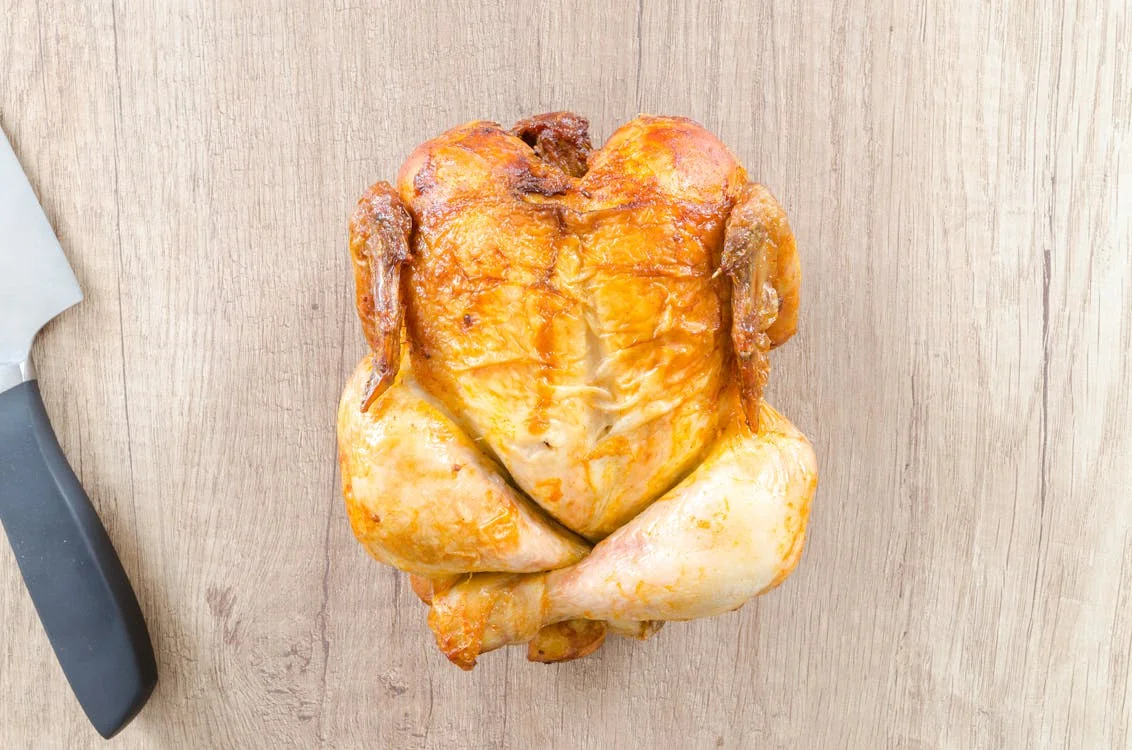
Chicken thighs are the weeknight fix for dry dinners. Breast overcooks and turns dinner into a chore. Thighs forgive you. They're fattier, usually cheaper per pound than breast, and hard to dry out.
TL;DR: Bone-in, skin-on chicken thighs at 425F on a wire rack for 35 minutes come out golden and crispy every time. Pat the skin completely dry and season under it, those two steps are all that separate good results from great ones.
Updated October 2026: the fat figures below now come from USDA FoodData Central (the old numbers were off), the nutrition card was recalculated for two thighs per serving, the per-pound grocery prices are gone because they couldn't be re-checked, and the drippings storage time follows USDA's leftover guidance.
This is the go-to recipe for a weeknight.
Why Chicken Thighs Beat Breast Every Time
USDA FoodData Central lists raw chicken thigh meat with skin at about 17% fat, against roughly 3% for raw skinless breast. Roasted, the gap holds: about 14.7% for thigh with skin and 3.6% for skinless breast. That fat is your flavor. It bastes the meat from inside while the skin gets golden and shatteringly crisp on the outside. Breast meat fans won't like hearing this, but thighs taste better. Period.
They're also way more forgiving with timing. Overcook a chicken breast by 3 minutes and you've got cardboard. Overcook thighs by 5 minutes? Still juicy. Still good. The connective tissue and fat keep working for you even when your timing isn't perfect.
| Chicken thighs | Chicken breast | |
|---|---|---|
| Fat content (raw, USDA) | ~17% with skin | ~3% skinless |
| Safe minimum (USDA) | 165F | 165F |
| Target for best texture | 175-180F | 165F, pulled promptly |
| Overcook forgiveness | Higher | Lower |
| Best cooking method | Wire rack, 425F | Careful monitoring required |

Ingredients
- 8 bone-in, skin-on chicken thighs (about 3 lbs total)
- 2 tablespoons olive oil
- 1 teaspoon garlic powder
- 1 teaspoon smoked paprika
- 1/2 teaspoon onion powder
- 1/2 teaspoon dried thyme
- 1/2 teaspoon freshly ground black pepper
- 1 teaspoon kosher salt (Diamond Crystal, if using Morton's, cut to 3/4 teaspoon)
That's it. No marinating. No brining. Just a dry spice rub and your oven.
Step by Step
Prep the thighs right
Preheat your oven to 425F. Pull the thighs from the fridge and pat them completely dry with paper towels. Both sides. Moisture is the enemy of crispy skin. Ever wonder why restaurant chicken skin shatters when you bite into it? They dry the skin obsessively.
Place a wire cooling rack inside a rimmed baking sheet lined with foil. The rack is non-negotiable if you want crunch on all sides. Without it, the bottom skin steams in its own juices and goes flabby.
Season generously
Mix all the dry spices in a small bowl. Drizzle olive oil over each thigh, then coat them with the spice mixture. Get it under the skin too, just slide your fingers between the skin and meat and rub seasoning directly on the flesh. Takes 10 seconds per thigh and the flavor difference is massive.
Arrange thighs skin-side up on the wire rack. Leave about 1 inch of space between each piece.
Bake at 425F
Slide the pan onto the middle rack. Set your timer for 35 minutes. Don't open the oven door. Seriously, don't. Every time you open it, a good chunk of heat escapes and the skin loses its crispiness window.
At 35 minutes, check the internal temp with an instant-read thermometer. You're looking for 175F in the thickest part, not touching bone. The USDA safe minimum is 165F, but thighs genuinely taste better at 175-180F because the extra heat renders the collagen into gelatin. That's what makes the meat silky instead of chewy.
If the skin isn't dark enough for your taste, flip the broiler to high for 2 minutes. Watch it like a hawk though, broilers don't mess around.
Rest before serving
Pull the pan out. Wait 5 minutes. It's hard when the kitchen smells this good, but resting lets the juices redistribute. Cut into one too early and all that moisture runs onto your cutting board instead of staying in the meat.
What to Serve Alongside
Rotate through a few sides depending on how much effort is left after work:
- Roasted broccoli, toss florets with olive oil, salt, and lemon zest at 425F for the last 15 minutes alongside the chicken
- Mashed potatoes, classic pairing, always works (a potato ricer makes the difference between fluffy and gluey)
- Simple green salad with a sharp vinaigrette to cut through the richness
- Sourdough bread, a thick slice of homemade sourdough does more for this dish than any dinner roll
- Rice, if you want a complete one-pan situation, check out our one pot chicken rice that uses the same spice profile
For something totally different, our garlic butter shrimp pasta makes a great alternate protein night when you want a break from chicken.
Quick Tips
Don't skip the wire rack. Thighs baked directly on a sheet pan sit in their own fat. The difference in skin texture is night and day. A basic cooling rack is one of the cheapest pieces of kitchen gear you can buy.
Buy bone-in, skin-on. Boneless skinless thighs work for stir-fries and tacos, but for this recipe you need the whole thigh. The bone conducts heat into the center of the meat and the skin provides the entire textural contrast that makes this dish worth making.
Room temperature matters. Pull your thighs from the fridge 20 minutes before cooking. Cold meat hitting a hot oven means the outside overcooks while the inside catches up. Twenty minutes on the counter is well inside the USDA's limit, which is no more than 2 hours for perishable food, or 1 hour when the room is above 90F.
Save the drippings. That golden liquid in the bottom of your pan? Pure flavor. Strain it into a jar, refrigerate it, and use it within 3 to 4 days, which is the USDA's window for cooked leftovers. Use it to saute vegetables, make gravy, or add depth to soups. Throwing it away is a crime.
This recipe suits dinner parties, tired Tuesday nights, and meal prep Sundays. It's the one to teach someone who says they can't cook. You rub spices on chicken and put it in a hot oven. That's really all there is to it.
Related Recipes
If you liked this, try these next: