
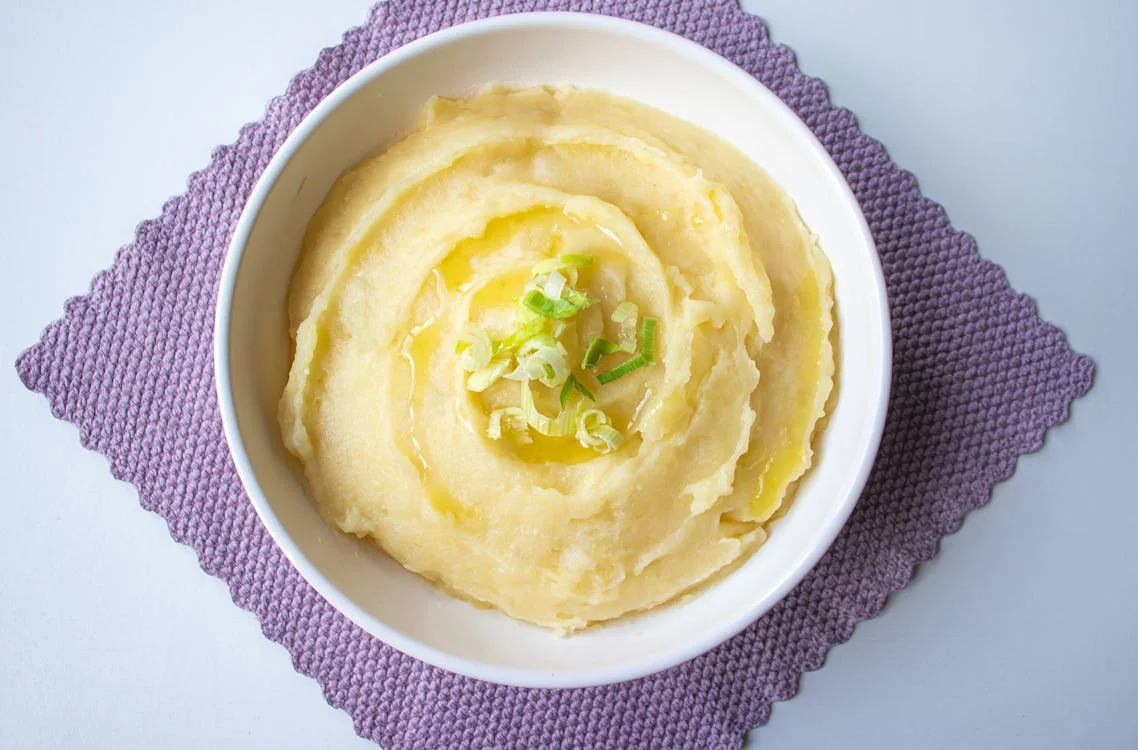
Disclosure: This post carries no affiliate links and nothing in it is sponsored. The comparison draws on retailer and manufacturer listings and on how each tool works, not on hands-on testing.
Mashing three pounds of Yukon Golds with a fork, yes, a fork, gets you sore arms and lumpy potatoes. The right tool fixes both.
Four common mashed potato tools, side by side, with the mechanics of why each one gives the texture it does.
TL;DR: A potato ricer (OXO Good Grips is the one compared here) is the tool most likely to give you fluffy, lump-free mashed potatoes, because each piece of potato passes through the holes only once. Rice the potatoes while hot, fold warm butter in first, and stop stirring early.
Updated October 2026: the old post quoted a $15.99 price, a model number, and a two-disc spec for the OXO ricer that don't match what retailers list now, so those are gone. The claim that a ricer needs peeled potatoes is also gone, because the skins stay behind in the hopper. Prices are no longer quoted for the other tools either, since the retail listings checked ranged too widely to print one number. Confirm the current price before you buy.

The Four Gadgets Compared
| Tool | Model | Typical cost | Texture |
|---|---|---|---|
| Potato Ricer | OXO Good Grips stainless steel | Low | Silky smooth |
| Potato Masher | Zulay Kitchen stainless steel | Lowest | Rustic, some lumps |
| Food Mill | RSVP Endurance rotary | Highest of the hand tools | Smooth, thick |
| Stand Mixer | KitchenAid paddle attachment | (included with the mixer) | Creamy |
The comparison assumes identical prep for every tool: Yukon Gold potatoes cut into 1.5-inch chunks, the same 18-minute boil, drained, then processed immediately while hot.
Best Overall: OXO Good Grips Potato Ricer
Drop a handful of hot potato chunks into the hopper, squeeze the handles, and perfect rice-shaped strands fall out. No lumps. Zero effort compared to hand mashing.
The soft, non-slip handles matter when you're working through 3+ pounds of potatoes. OXO sells two versions. The standard one has no interchangeable discs, and the adjustable one has built-in discs that twist from fine to coarse. Fante's lists the adjustable model at $39.99 as of October 2026.
Why does ricing work so well? Each potato piece passes through the small holes exactly once. One pass means minimal starch disruption. That's the entire secret to fluffy mashed potatoes, don't overwork them.
What works: Retailer listings describe both OXO ricers as dishwasher safe, and there's no motor or cord to deal with. Skins stay behind in the hopper while the potato goes through, so you can rice unpeeled potatoes.
What doesn't: You work in batches, and between batches you have to scoop the skins out of the hopper. The standard model also gives you one texture only. If you want a choice between fine and coarse, you're looking at the pricier adjustable one.
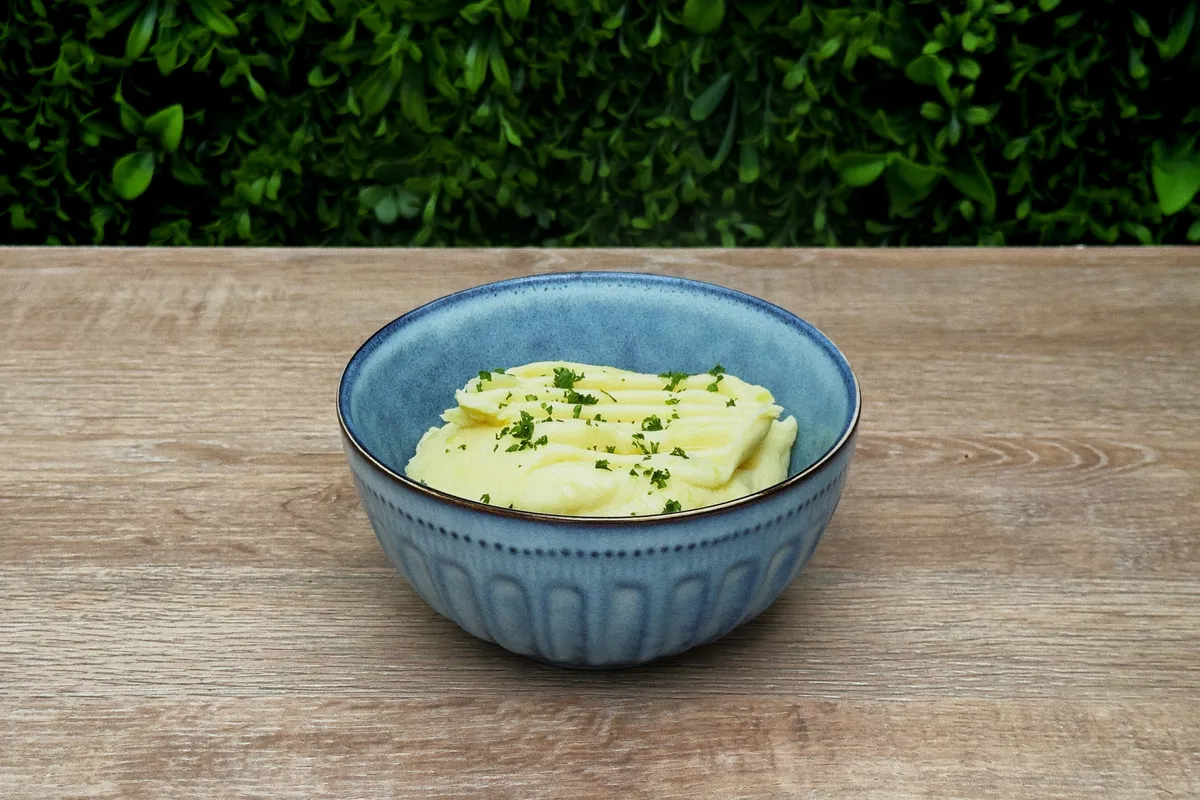
The Classic Masher: Zulay Stainless Steel
Everyone owns one of these. And honestly? For casual weeknight potatoes, it's fine. Not great. Fine.
The problem is consistency. Some bites are perfectly smooth, others have hard lumps hiding inside. You can keep mashing to eliminate them, but that's where trouble starts. Every extra press ruptures more starch cells, pushing your potatoes closer to glue territory.
A masher works best with starchy varieties like Russets that break apart easily. Waxy potatoes fight back. If you're making smashed potatoes where texture is part of the appeal, grab the masher. For Thanksgiving-quality smoothness, skip it.
The Old-School Pick: RSVP Food Mill
A food mill is the old-school option. Load cooked potatoes, skins and all, into the bowl, turn the crank, and smooth potato pushes through the bottom disc while the skins stay behind.
The skins stay behind in a ricer too, so that isn't the mill's edge. Its edge is range. The same tool also turns out tomato sauce and applesauce, which a ricer doesn't do as well, and the interchangeable discs let you pick a texture.
The downside? Cleanup. A mill has several discs, a bottom plate, and a crank mechanism, which is more to wash than a ricer. It usually costs more than a ricer, too, for a mash that's only marginally different in texture.
Worth choosing over a ricer? Only if you'll use it for other jobs. For mashed potatoes alone, the ricer wins on speed, simplicity, and price.
The Powered Option: KitchenAid Stand Mixer
If you already own a KitchenAid (and an Artisan costs several hundred dollars, so that's a big "if"), the paddle attachment makes decent mashed potatoes. Keep it on a low speed and stop the moment the lumps are gone. Don't go higher. Don't mix longer.
Let it run at a higher speed for a full minute and the potatoes go from fluffy to gummy fast once past the sweet spot. There's almost no margin for error with powered mixing because the paddle works the starch so fast.
It's convenient for large batches, 5+ pounds where hand-ricing gets exhausting. But for normal family dinners of 2-3 pounds? The ricer is faster when you factor in getting the mixer out, setting it up, and washing the bowl afterward.
Our Mashed Potato Recipe
Here's the recipe. Simple. Eight ingredients. Twenty minutes of active work.
Ingredients (serves 6):
- 3 lbs Yukon Gold potatoes, peeled and cut into 1.5-inch chunks
- 6 tbsp unsalted butter
- 3/4 cup whole milk, warmed
- 1/2 cup sour cream
- 1.5 tsp kosher salt
- 1/2 tsp white pepper
- 2 tbsp chives, finely chopped
- 1 clove garlic, minced and sauteed in butter
Method: Boil potato chunks in salted water for 18 minutes until fork-tender. Drain. Rice immediately through the OXO ricer into a large bowl. Fold in warm butter first (it coats the starch and prevents gumminess), then warm milk, sour cream, garlic, salt, and pepper. Stir gently, 15 to 20 strokes max. Top with chives.
The warm milk trick matters more than you'd think. Cold milk drops the potato temperature and makes the butter solidify into greasy pockets. Thirty seconds in the microwave fixes everything.
Which Gadget Should You Buy?
For most home cooks, a ricer such as the OXO Good Grips is the answer. It produces light, lump-free mashed potatoes with minimal skill required.
If you're cooking for a crowd and already own a stand mixer, use the paddle on low speed as a time-saver. And if you also make tomato sauce or applesauce, the food mill earns its counter space.
If you want a multi-function appliance that handles soups, sauces, risotto, and dough, not just mashing, My House My Home reviewed the Monsieur Cuisine Smart B1, a Thermomix-style cooking machine available at Lidl for under EUR 500.
But don't just trust your tools. The right nonstick pan matters too: warm the butter and milk in one before folding them into the potatoes. Good equipment makes good food easier.
Related Recipes
If you liked this, try these next: