
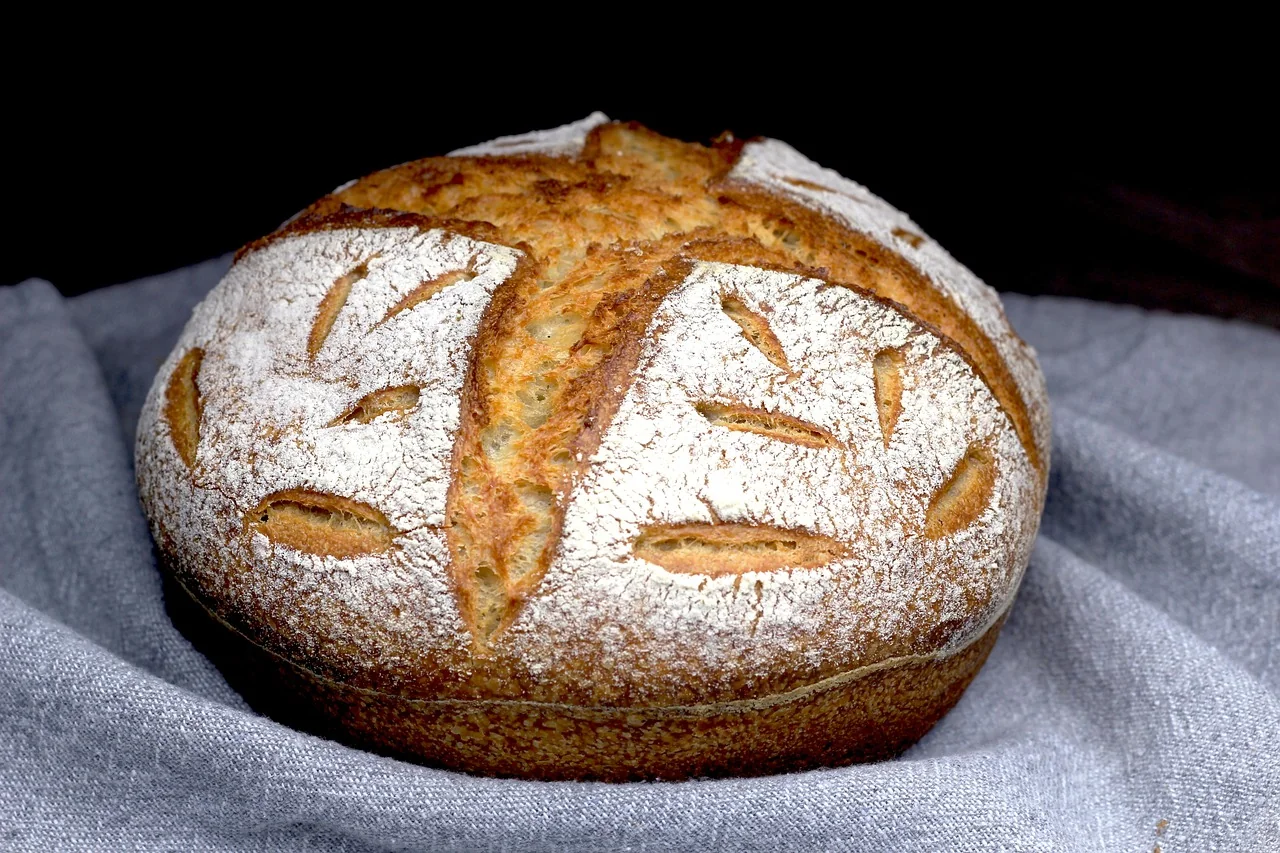
A first homemade sourdough loaf often looks like a frisbee. Flat, dense, and roughly the texture of a hockey puck. Weeks of growing the starter and nine hours of waiting for the dough to rise make that sting. Consistent bread comes once a few variables are under control.
Sourdough isn't hard. It's just slow. Every beginner hits the same wall: you get the first few loaves wrong, lose confidence, and wonder if your starter maintenance routine is off or your bake schedule is the problem. Usually it's both.
One thing worth knowing before you clear an afternoon: of the roughly 17 hours this loaf spans, about 30 minutes are hands-on. The rest is dough sitting there doing its own thing while you get on with your day.
TL;DR: Sourdough takes 5-10 loaves to feel comfortable with, but the process is simple: active starter, 72% hydration dough, overnight cold retard, Dutch oven at 500F covered for 20 minutes then 450F uncovered. The cold fridge proof develops flavor and makes the dough much easier to score.
How Do You Get Your Starter Ready?
You can't skip this part. Sourdough bread needs an active, bubbly starter, that's the wild yeast that makes the bread rise without commercial yeast packets.
Making a starter from scratch
Day 1: Mix 50g whole wheat flour and 50g lukewarm water (around 78F) in a clean glass jar. Stir until smooth. Cover loosely. Walk away.
Days 2-6: Every 24 hours, discard half and add 50g all-purpose flour and 50g water. You'll see bubbles by day 3 or 4. It might smell weird, vinegary, almost like nail polish remover. Normal.
Days 7-14: Switch to twice-daily feedings if you see consistent bubbles. Your starter is ready when it doubles in size within 4-6 hours of feeding and smells pleasantly tangy. King Arthur Baking's sourdough starter guide backs this up, consistent doubling is the most reliable readiness indicator, more useful than any fixed day count.
Keep it in a wide-mouth 32-oz Mason jar ($8.99/12-pack at Target). Mark the level with a rubber band after feeding so you can track the rise.
The float test
Drop a small spoonful of fed starter into water. If it floats, it's ready to bake with. If it sinks, feed it again and wait 3-4 hours. Do this before every single bake.
Why Weigh Your Ingredients Instead of Using Cups?
Here's the one upgrade that fixes more loaves than any technique: a $12 kitchen scale. Cups lie. A cup of flour can weigh anywhere from 120g to 150g depending on whether you scooped or spooned it, and that 30g swing is the gap between 72% hydration and a stiff, dense dough that never opens up.
Every number in this recipe is a weight in grams for that reason. Converting from a cup-based recipe, or just want a sense of scale? Here's what the common sourdough ingredients actually weigh:
| Ingredient | 1 cup | 1 tablespoon |
|---|---|---|
| Bread flour | 120g | 8g |
| Whole wheat flour | 113g | 7g |
| Water | 237g | 15g |
| Active starter | 227g | 14g |
| Fine sea salt | - | 18g |
Sugar, butter, cocoa and the rest of the pantry are in the baking substitutions and conversions chart, along with oven temperatures in Celsius and gas marks.
Weigh straight into the bowl on the scale, zeroing between each addition. It's faster than washing measuring cups, and it's the reason two loaves from the same recipe come out the same. Salt is the one to weigh without exception, since a heaped tablespoon of coarse salt can be half again as much as a level one, and oversalted dough ferments sluggishly.
The Bread Recipe
This is the standard loaf. Nothing fancy. Just flour, water, salt, and starter.
- 375g bread flour (King Arthur, $5.99/5 lb bag)
- 75g whole wheat flour
- 325g water at 80F
- 75g active starter (passes the float test)
- 9g fine sea salt
That's roughly 72% hydration for the nerds keeping score. Higher hydration gives you bigger holes in the crumb but makes the dough stickier and harder to handle. Go lower (65-68%) for your first few loaves.
How Long Should Bulk Fermentation Take?
Autolyse (30 minutes)
Combine the flours and water in a large bowl. Mix until no dry patches remain. Cover and let it sit 30 minutes. This rest hydrates the flour and starts gluten development before you even knead.
Add starter and salt
Pour the starter on top. Sprinkle the salt over that. Squeeze and fold the dough until incorporated, about 2-3 minutes. It'll feel shaggy. That's fine.
Stretch and fold (4 rounds)
Every 30 minutes for 2 hours, do a set of stretch and folds. Wet your hand, grab one side of the dough, stretch it up, fold it over the center. Rotate 90 degrees. Repeat four times per round.
After four rounds the dough should feel smooth and slightly elastic. At 72F, this takes about 2 hours.
Let it bulk ferment
Cover and leave the dough alone for 3-6 hours at room temperature. At 72F it takes about 5 hours total. At 78F it might be 3.5 hours.
You're looking for a 50-75% increase in volume. Poke it, if the indent springs back slowly, you're there. If it springs back fast, give it more time. Watch the dough, not the clock.
How Do You Shape the Loaf?
Dust your counter with flour. Turn the dough out. Using a bench scraper ($6.99 from Amazon), shape it into a round by tucking the edges underneath. Rest 20 minutes.
Final shape, pull edges toward center, flip seam-side down, and drag it toward you with the bench scraper, building surface tension. It should feel taut.
Place seam-side up into a floured banneton basket (9-inch round, $12.99). No banneton? A bowl lined with a well-floured kitchen towel works.
Why Cold Retard the Dough Overnight?
Cover with plastic wrap and refrigerate 12-16 hours. This cold proof slows fermentation, develops more sour flavor, and makes the dough way easier to score before baking.
Shape around 8 PM and bake the next morning. Could you skip the fridge and bake same-day? Sure. But the flavor won't be as complex, and scoring warm dough is like cutting pudding with a razor.
How Do You Bake It in a Dutch Oven?
Preheat your oven to 500F with a Dutch oven inside for 45 minutes. A Lodge 5-quart combo cooker ($44.90) works well.
Pull dough from the fridge. Flip onto parchment paper. Score the top with a razor blade, one confident slash about 1/4 inch deep at a 30-degree angle.
Lower the dough into the screaming hot Dutch oven. Cover with the lid. Bake at 500F for 20 minutes. Remove lid, drop to 450F, bake 20-25 more minutes until deep golden brown. Internal temp should read 205-210F.
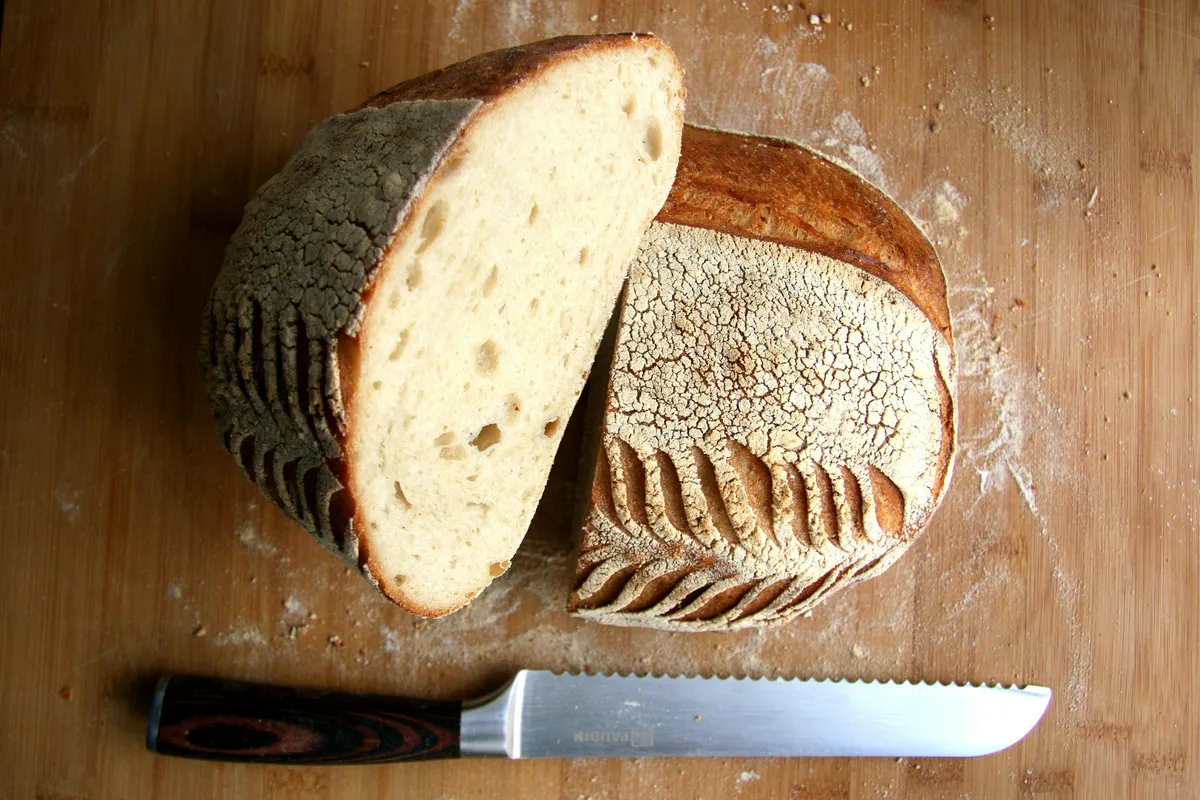
Cool on a wire rack for at least 1 hour before cutting. Cutting hot bread releases steam and makes the crumb gummy.
Does Your Kitchen Temperature Change the Schedule?
More than any other variable, and this is the thing that breaks people who follow a recipe's clock instead of watching the dough. Every timing in this guide assumes a kitchen sitting around 72F. A kitchen can drop to 65F in winter and climb past 78F in August, and the same dough takes wildly different amounts of time in those two kitchens.
The rough rule: every 10F drop roughly doubles the bulk fermentation time. At 72F a proper bulk takes 4 to 5 hours. At 65F it can stretch to 8, and pulling the dough on schedule gives an underproofed loaf. In an 80F kitchen it can be done in under 3, and a dough left the "normal" 4 hours will be a soupy overproofed mess.
So stop timing and start reading the dough. It's ready when it has risen about 50 percent, feels airy and domed rather than slack, and shows a few bubbles at the surface and along the sides of the container. A straight-sided container with a rubber band at the starting level tells you more than any timer.
Two practical fixes for a cold kitchen. Use warmer water, up to 90F, since dough temperature is what actually matters and water is the easiest lever. Or park the container in the oven with only the light on, which holds most ovens around 78 to 80F. Check it with a thermometer first, some run hot enough to start cooking the dough.
What If Your Loaf Comes Out Wrong?
Flat loaf: Weak starter or overproofed dough. Make sure your starter doubles reliably before baking. If the dough collapsed during the fridge proof, you let bulk fermentation go too long.
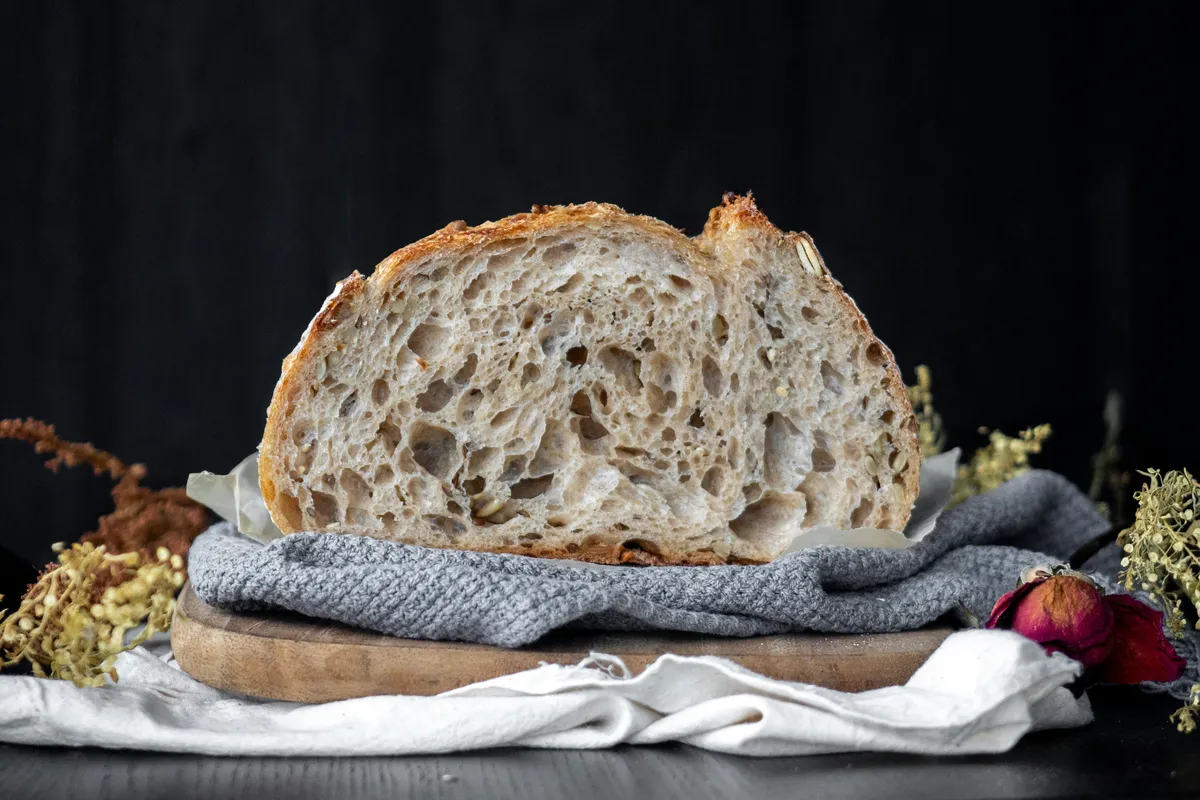
Dense crumb: Underproofed. Give it more time during bulk fermentation next round. Also check your water temperature, cold water slows everything down.
Pale crust: Oven not hot enough, or you didn't bake long enough with the lid off. Push past golden into dark golden. Sourdough can handle it.
Gummy interior: You cut it too soon, or it's underbaked. Use a thermometer. 205-210F internal.
| Problem | Likely cause | Fix |
|---|---|---|
| Flat loaf | Weak starter or overproofed dough | Confirm starter doubles before baking; shorten bulk ferment |
| Dense crumb | Underproofed dough | Extend bulk fermentation; check water temp |
| Pale crust | Oven too cool or lid on too long | Bake hotter, longer uncovered |
| Gummy interior | Cut too soon or underbaked | Rest 1+ hour; check internal temp hits 205-210F |
If you're looking for more hands-on kitchen projects, seasoning a cast iron skillet has a similar satisfaction to it, slow process, big payoff. And once you've got your bread game down, pair fresh sourdough slices with our garlic butter shrimp pasta for garlic bread that'll ruin restaurant versions for you.
Sourdough baking is a skill that takes 5-10 loaves to feel comfortable with. Stick with it.
Related Recipes
If you liked this, try these next: