

Korean fried chicken from a takeaway counter is expensive, and a basket air fryer gets you most of the way there at home without heating up the kitchen like an oven does. This is the wing recipe worth making on a Friday night.
Quick take: Dry-brine the wings with salt, baking powder, and cornstarch for at least 30 minutes. Air fry at 200C for 18-20 minutes total. Toss in a gochujang-honey-soy glaze while still hot. The skin shatters when you bite it. No double frying, no oil splatter, no 90-minute cleanup.
The 2026 air fryer boom hit Korean food specifically hard. Search interest in "Korean fried chicken air fryer" jumped roughly 4x year over year on Google Trends, and it makes sense once you've cooked it both ways. Traditional Korean fried chicken (KFC, not the chain) requires two fries: once at lower oil temperature to cook through, then a second at higher temperature to crisp. That's 90 minutes minimum, a kitchen full of oil splatter, and a heavy clean-up. The air fryer does it in one pass without the oil bath, gets you 90% of the texture, and saves a lot of dishwasher cycles.
Why Air Fryers Beat Deep Frying for Wings at Home
Most home deep-fry rigs run 1.5 to 2 quarts of oil heated to 350F. You drop in cold wings and the temperature crashes 30-40F, your wings start to absorb oil rather than crisp, and you wait 8-10 minutes per batch. To get the double-fry crispness, you pull them at 165F (the USDA-safe minimum for poultry), rest them 5 minutes, then drop them in 375F oil for another 2-3 minutes. The end result is genuinely excellent. The setup, oil cost, and cleanup are also genuinely excellent at convincing you to order takeout next time. So why bother heating two quarts of oil when a dry brine and a hot basket get you 90% of the way there?
Air fryers solve the oil management problem entirely. A typical unit runs around 1.2 kW of convection heat at 200C with a small fan circulating air at maybe 1 to 2 m/s. That's enough to render the skin's fat and brown the surface like a 350F oil bath does, without you actually owning the oil bath. The catch is you have to manage moisture differently. Where deep frying lets the oil pull water out of the skin in seconds, the air fryer relies on a dry brine and proper spacing in the basket to do the same job. Get those two things right and the texture is shockingly close to double-fried.
The basket has to be hot before the wings go in. Most air fryers preheat in 3 to 4 minutes. Skip this step and the first 4 minutes of cook time are spent bringing the basket up to temperature with cold wings sitting in there sweating. The skin steams, water condenses, and you end up with soft, flabby skin that no amount of additional cook time will rescue. Preheat the basket. It's the single biggest variable in this whole recipe.
What Makes Korean Fried Chicken Different From Other Wings?
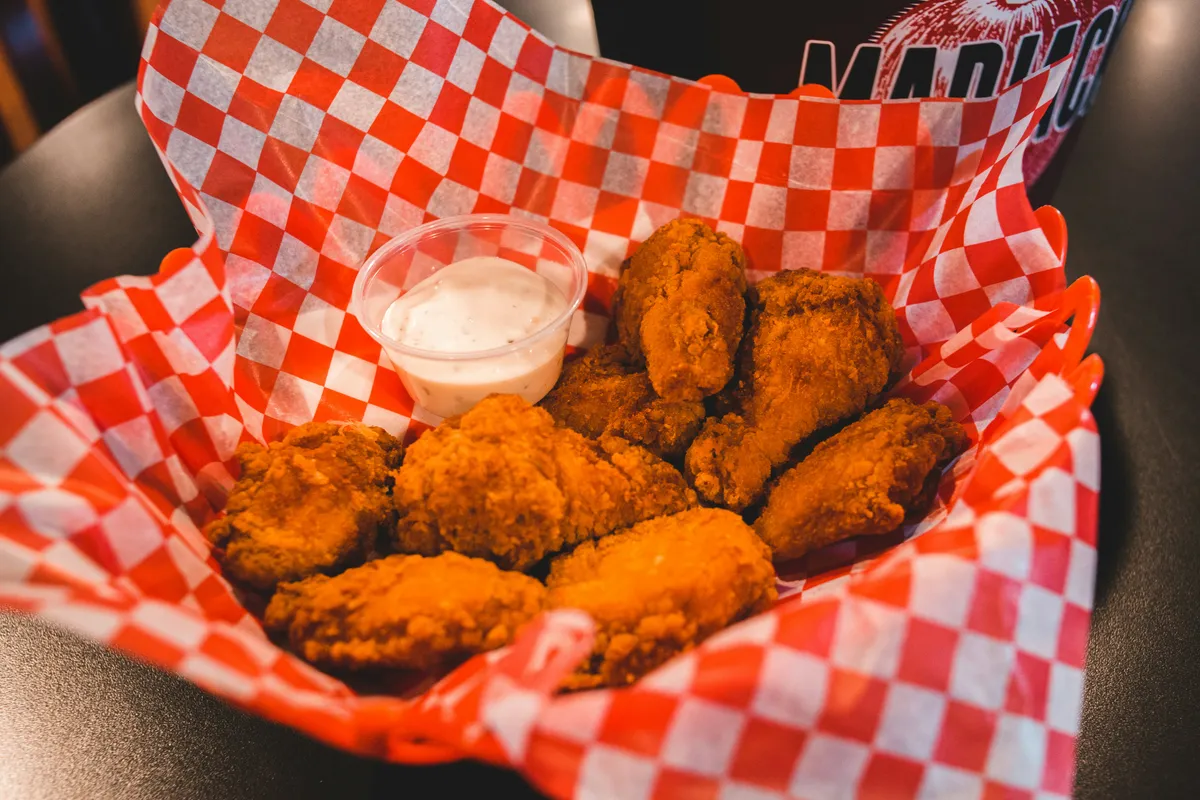
Three things, in order of importance. The crust uses cornstarch or potato starch (not flour) which fries into a thinner, more brittle shell that shatters when you bite it. Wheat flour creates a thicker, breadier crust that softens within minutes of being glazed. Cornstarch holds crisp under sauce for 20-30 minutes; flour gives up in five. Ever wonder why your homemade wings go limp the second the glaze hits them? Nine times out of ten, it's the flour. The glaze is applied while the wings are still piping hot so it adheres without needing extra cooking. Gochujang's deep fermented umami carries the dish; honey balances the heat; soy sauce and rice vinegar tie everything together. The double-fry in the traditional method extracts every drop of moisture from the skin. We're substituting dry-brining plus a hot air fryer to get most of the same effect with a fraction of the effort.
You'll see two main glaze styles in Korean fried chicken: yangnyeom (sweet-and-spicy, what we're making here) and ganjang (soy-garlic). Both work with this same wing prep. Start with yangnyeom because gochujang is the more interesting flavor and the dish gets photogenic in a way that ganjang doesn't quite hit. Once you've nailed yangnyeom, mix half soy-garlic next time and you have a sampler platter for dinner that feels far more involved than 35 minutes of effort.
| Yangnyeom | Ganjang | |
|---|---|---|
| Flavor profile | Sweet, spicy, fermented umami | Savory, garlicky, mildly sweet |
| Base ingredients | Gochujang, honey, soy sauce | Soy sauce, garlic, brown sugar |
| Heat level | Medium (brand-dependent) | None |
| Best for | First-timers, photogenic spread | Kids, spice-averse guests |
The Recipe (Detailed)
Serves 4 hungry people as a main, or 6-8 as a starter with rice and pickles.
Wings and dry brine
- 1 kg / 2.2 lb chicken wings, separated into drums and flats (tips discarded or saved for stock)
- 1.5 teaspoons fine sea salt
- 0.5 teaspoon baking powder (NOT baking soda)
- 1 teaspoon cornstarch
Gochujang glaze
- 3 tablespoons gochujang
- 2 tablespoons honey
- 2 tablespoons soy sauce (regular, not low-sodium)
- 1 tablespoon rice vinegar
- 1 clove garlic, minced finely
- 1 teaspoon fresh ginger, grated
- 1 teaspoon toasted sesame oil
Garnish
- 2 teaspoons toasted sesame seeds
- 2 scallions, green parts only, thinly sliced
- Pickled radish (mu) on the side, if you can find it
Method follows the howTo schema above. The whole recipe is 35 minutes from cold fridge to plated wings if you do the 30-minute brine, longer if you do the 4-hour version (which is genuinely better).
What Air Fryer Should You Use?
Any air fryer with a basket between 4 and 8 quarts will work for this recipe. Three kinds of machine fit: a budget 5.8-quart basket model, a Ninja Foodi dual-basket, and a Breville Smart Oven Air Fryer Pro. The dual-basket model is the standout for parties because you can run yangnyeom in one basket and ganjang in the other simultaneously. The Breville lets you load more wings per batch, but it takes longer to preheat.
The one type to avoid for wings specifically is any model with a non-perforated tray rather than a true basket. The airflow underneath matters; trays trap moisture and your wings end up soggy on the bottom side. If you're shopping, look for a model with a basket-style cooking surface and at least 1.5 kW of heating power for fastest preheat. Not sure which one to grab? Our best air fryers under $100 roundup covers six models, and the same basket that nails these wings also handles air fryer pork chops on a weeknight.
Common Mistakes and Their Fixes
Skin sticks to the basket. Your air fryer basket needs a light spray of neutral oil before you load the wings. Use a refillable pump bottle with sunflower oil, since aerosol cans sometimes have propellants that leave a sticky residue. Two quick sprays is enough.
Glaze burns onto the basket if you cook with it. Don't. Why would you scrub caramelized sugar off a hot basket when you can toss the wings in a bowl instead? The wings cook plain in the air fryer; the glaze is added in a bowl after cooking. This is the single biggest difference from American sauced wings, which often go back in the oven to set the sauce. Korean style keeps the sauce as a fresh, glossy coating rather than caramelized into the skin.
Wings come out unevenly cooked. Either your basket is too crowded or your air fryer has hot spots. Reduce the batch size by 25% and rotate the basket 180 degrees at the halfway flip. If problems persist, your air fryer's heating element is failing or significantly off-center; it's worth running a test with a thermometer in the basket to confirm.
The glaze is too spicy / not spicy enough. Gochujang heat varies by brand and age. Chung Jung One is mild and approachable for first-timers; Sempio runs hotter. Adjust the ratio of gochujang to honey by 0.5 tablespoon increments until you find your preferred heat level. If the dish is too spicy after plating, a drizzle of honey on top mellows it instantly without diluting the umami.
Serving Suggestions
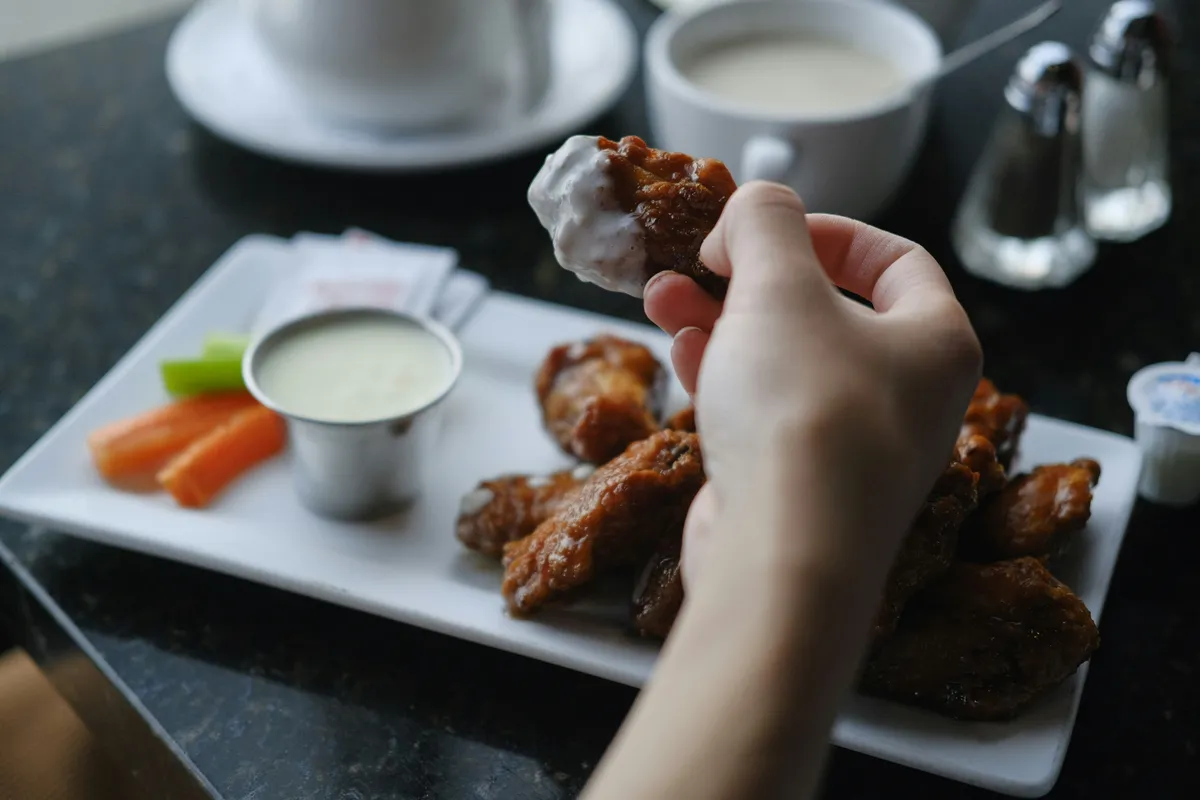
Korean fried chicken at home almost always comes with one or more of: steamed short-grain rice, kimchi, pickled daikon radish (mu), and ice-cold beer or Hite makgeolli. The rice and pickled radish are non-negotiable; they cut the richness of the chicken and reset your palate between bites. Homemade danmuji takes about 8 minutes to prep and rests in the fridge for 24 hours; worth the effort if you have notice.
For a fuller spread, add japchae (sweet potato glass noodles), a simple cucumber salad with rice vinegar, or scallion pancakes. Want to turn it into a full Asian dinner night? Plate the wings next to the 15-minute Thai basil chicken pad krapow and nobody leaves the table hungry. The wings will feed 4 as a main with rice and one side. If you're hosting, double the recipe and run two batches back to back; the air fryer is hot, the second batch goes faster, and you'll have everyone fed within an hour of starting.
Storage and Reheating
Wings are best eaten within an hour of cooking; the glaze stays glossy and the skin holds its crunch. Leftovers store fine in a sealed container in the fridge for 2 days. Tempted to just microwave the leftovers? Resist it. To reheat without losing the texture, return them to the air fryer at 180C for 4 to 5 minutes, not the microwave, which steams the skin and turns it rubbery. The glaze will look duller after reheating but the taste holds up.
For prep-ahead parties, you can dry-brine the wings up to 12 hours in advance and keep them uncovered in the fridge. The glaze can be made up to 4 days ahead and stored in a sealed jar. Air fryer time and method stay the same. That gives you a 35-minute total from "guests arrive" to "wings on the table" with zero prep stress.
This recipe earns a permanent Friday night slot. The gochujang glaze plus shattering crust is one of those dishes that ruins lesser fried chicken for you forever. Worth the 30 minutes of dry-brine time, every single time.
Related Recipes
If you liked this, try these next: