
Squash season arrives and everyone reaches for the blender. Butternut soup. Again.
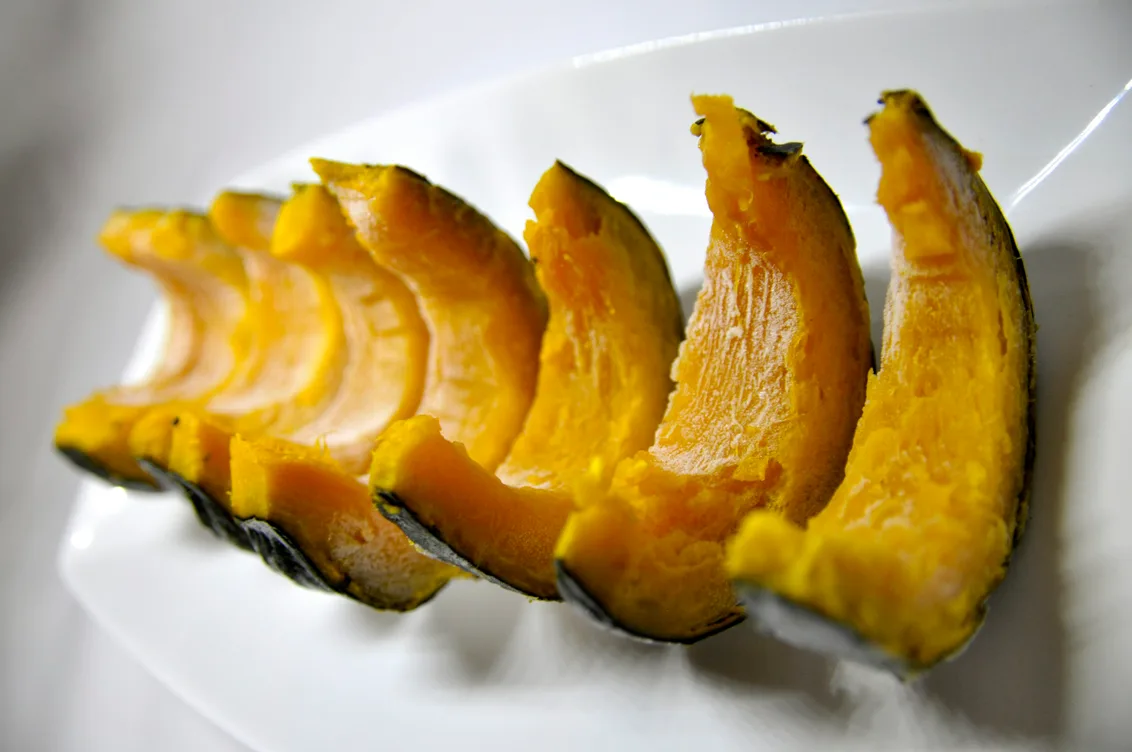
There's nothing wrong with it. But squash is one of the few vegetables that rewards high heat with genuine transformation, and pureeing it throws that away. Roast a wedge of kabocha properly and the edges go dark and sweet, the flesh turns dense rather than watery, and you get something with actual texture. Blitz it with stock and you've made an orange liquid.
Squash is one of the few vegetables that rewards high heat with genuine transformation, and pureeing it throws that away.
So what else is there?
Start with the roasting, everything else follows
Almost every good squash dish begins the same way, and most people get the temperature wrong.
Squash wants 425 F / 220 C, not the 375 F that recipes often suggest. Lower heat cooks it through without browning, which gives you soft, wet, faintly sweet cubes. Higher heat drives off moisture at the surface first, and the sugars caramelise before the inside turns to mush.
Cut it into pieces around an inch and a half. Toss with oil, more than feels right, roughly a tablespoon per pound. Spread on a tray with space between the pieces. Crowd them and they steam instead of roasting, which is the single most common failure and the reason home-roasted vegetables often taste flat.
Twenty-five to thirty-five minutes, flipping once. You want dark patches, not an even golden colour. Those patches are the flavour.
Cast iron does this better than a thin baking sheet, since the mass holds heat when the cold squash hits it. If your pan is looking dull, our notes on seasoning cast iron will help more than buying a new one.
Not all squash is interchangeable
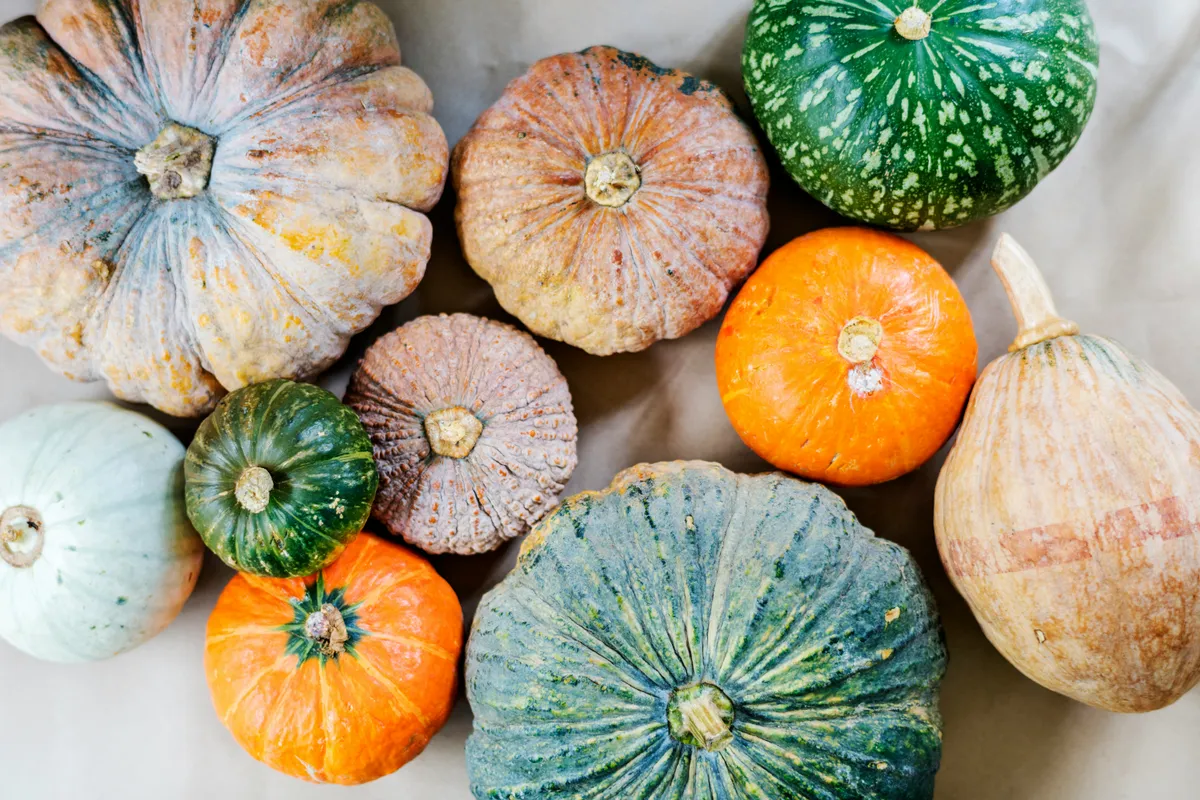
Recipes say "winter squash" as though it's one ingredient. Is it? Not remotely, and buying the wrong one is why a dish sometimes disappoints for no obvious reason.
Butternut is the reliable default. Sweet, smooth, low fibre, easy to peel because the neck is solid. It's also the wettest of the common varieties, so it benefits most from that high oven. That is not a taste impression: winter squash runs around 89 percent water raw in the USDA's composition data, and the whole point of 425 F is to get rid of a chunk of it before the sugars have to compete with it.
Kabocha is the one worth seeking out. Dense, almost chestnut-like, drier than butternut and considerably sweeter. It roasts to something closer to a sweet potato than a marrow. The skin is edible once cooked, which saves the worst job.
Delicata is small, striped, and thin-skinned. No peeling at all. Slice it into half-moons, roast, done in twenty minutes. If you're cooking on a weeknight, this is the one.
Acorn looks the part and is, in my opinion, the weakest of the four. Stringier, more watery, less sweet. It's fine stuffed, where other ingredients carry the dish, but it won't shine on its own.
Buy heavy for its size, with a dry, corky stem still attached. A missing stem means it was cut early or handled roughly, and it'll rot from that end within a fortnight.
Four directions that aren't soup
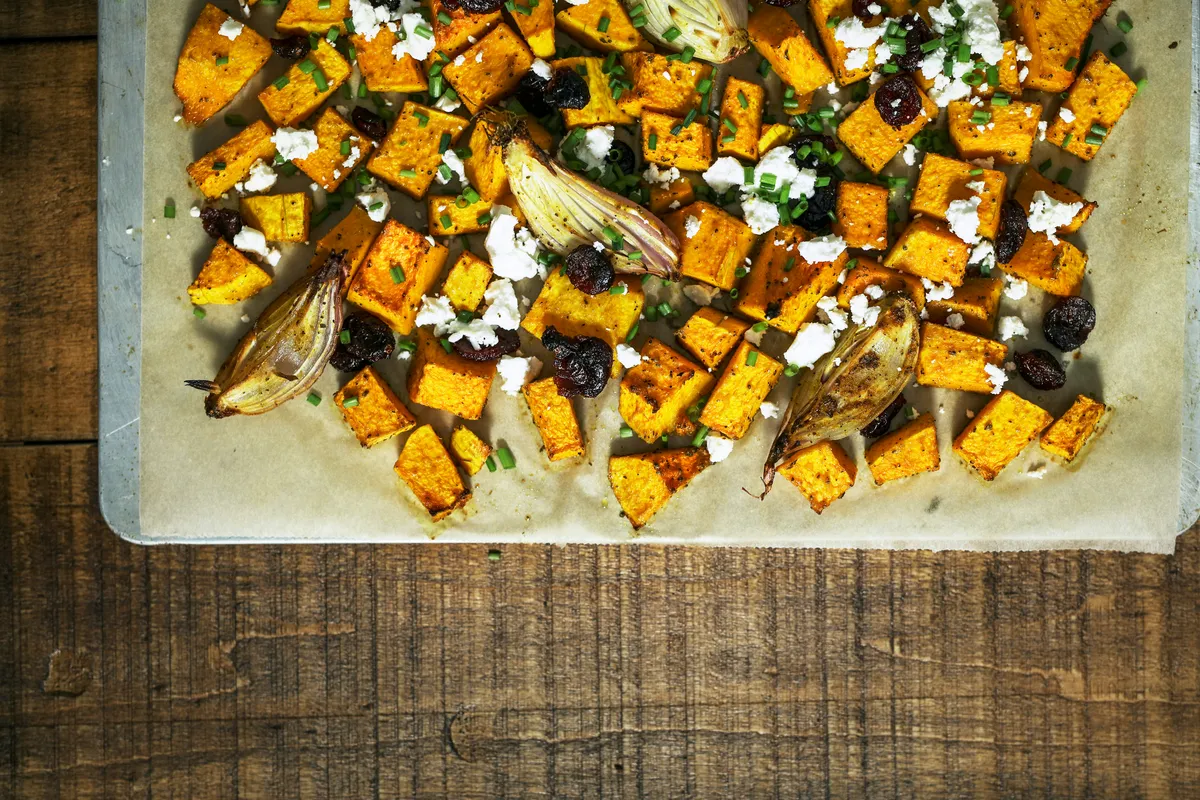
Sheet pan with sausage and something sharp. Squash, red onion, and good sausage on one tray. The fat renders into the squash. Add something acidic at the end, since the whole thing is sweet and fatty and needs a counterweight. A splash of sherry vinegar over the hot tray, or crumbled feta. This is the closest thing to a complete meal from one pan, and it scales to feed people without more work.
Grain bowls. Roasted squash, a grain, something green, something crunchy, a dressing with real acidity. Farro holds up better than rice here because it stays chewy under the dressing. This is also the best use for leftovers, which matters given a butternut yields more than two people will eat.
Stuffed halves. Halve, scoop, roast cut-side down for twenty minutes, turn over, fill, and finish. Cut-side down first is the part people skip, and it's what steams the flesh tender before the filling goes anywhere near the oven. Acorn squash finally makes sense here.
Pasta, without the puree. Roasted cubes tossed through pasta with brown butter, sage, and plenty of black pepper. Some pieces break down and coat the pasta, some stay whole. That contrast is the entire point, and it's exactly what a smooth sauce destroys. If you like this kind of one-pan simplicity, one pot chicken and rice works on a similar principle.
What about the seeds?
Everyone throws them away and then buys pumpkin seeds in a packet. It's a strange habit.
Rinse them, pick off the worst of the stringy flesh, and don't bother getting them perfectly clean. Pat dry, toss with oil and salt, and roast at 300 F / 150 C for about twenty minutes, stirring halfway. Low and slow here, not the high heat you used for the flesh. Seeds burn at 425 F before the insides dry out.
Kabocha seeds are the best of the lot, plump and nutty. Butternut seeds are smaller and thinner but still worth it. A large squash yields maybe half a cup, which is a snack rather than a pantry item, but it costs you nothing beyond oven time you're already paying for.
Add spice after roasting, not before. Ground paprika or cumin scorches over twenty minutes and turns acrid.
The skin question
Can you eat it? Depends entirely on the variety, and guessing wrong ruins a dish.
Delicata and kabocha skins are thin and go tender in the oven. Eat them. You save yourself the most tedious prep step in autumn cooking.
Butternut skin is edible but leathery, and it doesn't soften enough to be pleasant. Peel it. Acorn skin is tough and ridged, which makes peeling awkward, so roast it in the skin and scoop the flesh out afterwards.
Prep without losing a finger
Winter squash is hard, round, and keen to roll away from your knife. That combination sends people to hospital every autumn.
Cut a flat base first. Take a thin slice off one side so the squash sits still, then work from that stable footing. Never cut into a rounded surface.
For butternut, separate the neck from the bulb before doing anything else. The neck is solid flesh and easy to handle. The bulb holds the seeds and needs different treatment. Trying to halve the whole thing in one go is fighting the vegetable.
Microwave for two minutes if it's fighting you. It softens the skin just enough to make the knife work safer, and it changes nothing about the final dish.
A sharp knife matters more than a big one here. So does a pan that won't warp under high heat, and our nonstick pan testing covers what survives a hot oven and what doesn't.
Where people go wrong
Not enough oil. Squash is dry and starchy. Under-oiled pieces dry out before they brown.
Salting too early is fine, actually. Salt draws out moisture, but at 425 F that moisture evaporates fast and the surface still browns. Season before it goes in.
Adding garlic at the start. Thirty minutes at high heat turns garlic bitter. Add it in the last ten minutes, or toss it through afterwards.
Treating every squash as sweet. Kabocha and butternut are sweet enough to need salt, acid, and often heat. Chilli flakes, lemon, vinegar, sharp cheese. Without one of those, the whole plate reads as dessert.
Buying pre-cubed. Is the time saved worth it? Rarely. It's cut days ahead, and the exposed surfaces dry and oxidise. You pay more for something that browns worse.
Squash keeps, which is why it's worth buying properly
A whole, uncut winter squash sits in a cool cupboard for two to three months. Not the fridge, which is too humid and encourages rot at the stem.
Once cut, it's a three-day vegetable in the fridge, wrapped. Roasted squash keeps four or five days and reheats better in a hot oven than a microwave, which turns it soggy.
That storage window is what makes squash worth planning around. Buy two in October, use one within a week, and the other is still perfectly good in December when the shops have moved on. It's the rare seasonal ingredient that waits for you.
It's also cheap right now, which is the other half of the argument. Butternut went under a dollar a pound in the September ad prices I tracked in this month's produce price guide, and that's the week to buy two.
And it deserves better than the blender.