
We didn't freeze, thaw or taste anything for this page. Every number below comes from USDA's Food Safety and Inspection Service (FSIS) and FoodSafety.gov, and where those two disagree, we say so.
TL;DR: Food held at 0F stays safe indefinitely, so freezer times are about quality, not safety. Get cooked food into the fridge or freezer within 2 hours, pack it airtight in shallow portions, date it, and thaw it in the fridge, in cold water or in the microwave. Reheat everything to 165F.
What Freezes Well, and What Doesn't?
Almost anything can be frozen. Liking it afterward is a different question. FSIS names mayonnaise, cream sauce and lettuce as poor candidates. FoodSafety.gov's chart adds egg, chicken, tuna and macaroni salads, hard-cooked eggs and custard pies to the "don't bother" list. Shell eggs shouldn't be frozen at all.
Cooked food loses to raw food here. FSIS notes that raw meat and poultry hold their quality longer than cooked, because cooking has already driven out moisture. Vegetables need a head start too. Most that freeze well are low in acid and need brief partial cooking (blanching) in boiling water or the microwave, then a fast chill, before they go in.
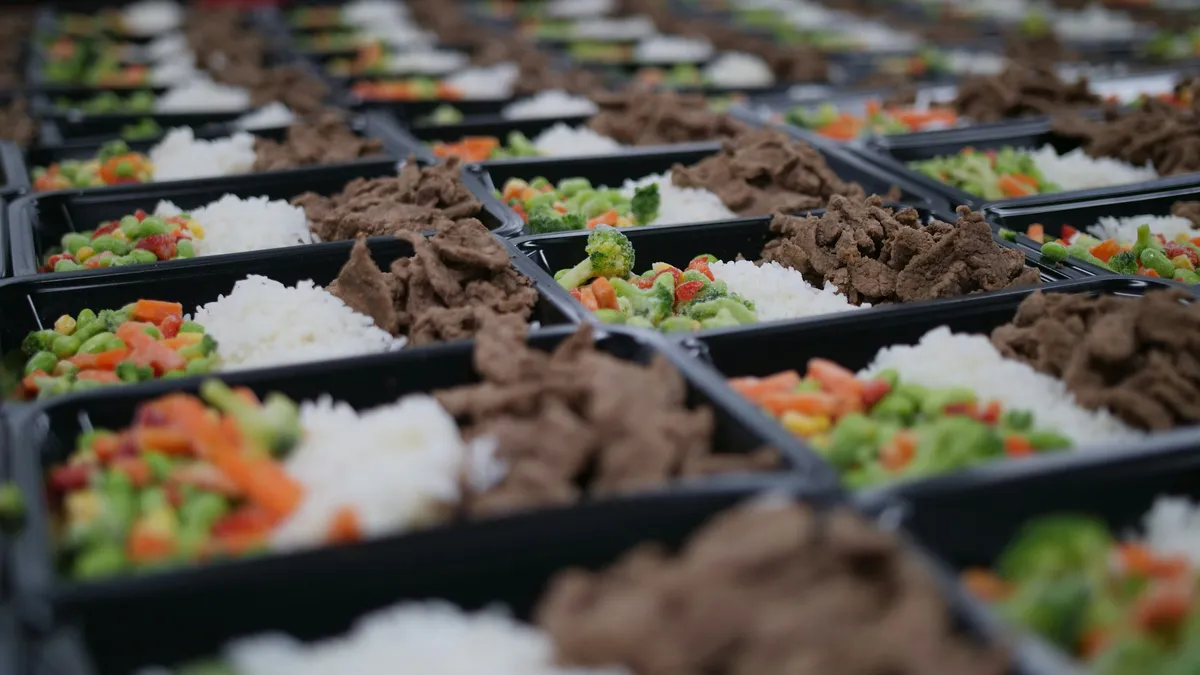
That leaves a dependable shortlist for planning: soups, stews, cooked meat and poultry, casseroles, and egg bakes like quiche.
How Long Do Frozen Meals Last?
Here's the part people get backwards. Freezing holds microbes dormant, so food kept constantly at 0F is always safe. Time only hurts texture and flavor. Treat the numbers below as a "use by" for quality, taken from the FoodSafety.gov Cold Food Storage Chart.
| Food | Refrigerator (40F) | Freezer (0F) |
|---|---|---|
| Soups and stews (vegetable or meat added) | 3 to 4 days | 2 to 3 months |
| Cooked meat or poultry leftovers | 3 to 4 days | 2 to 6 months |
| Casseroles with eggs, after baking | 3 to 4 days | 2 to 3 months |
| Quiche with filling, after baking | 3 to 5 days | 2 to 3 months |
| Chicken nuggets or patties | 3 to 4 days | 1 to 3 months |
| Pizza | 3 to 4 days | 1 to 2 months |
| Egg, chicken, tuna or macaroni salad | 3 to 4 days | Does not freeze well |
| Hard-cooked eggs | 1 week | Do not freeze |
The sources don't fully agree. FSIS's leftovers guide gives a blanket 3 to 4 months, while its freezer chart lists cooked meat at 2 to 3 months and cooked poultry at 4. When in doubt, use the shorter number. Our easy meal prep ideas cover the fridge half.
How Do You Cool and Package Meals for the Freezer?
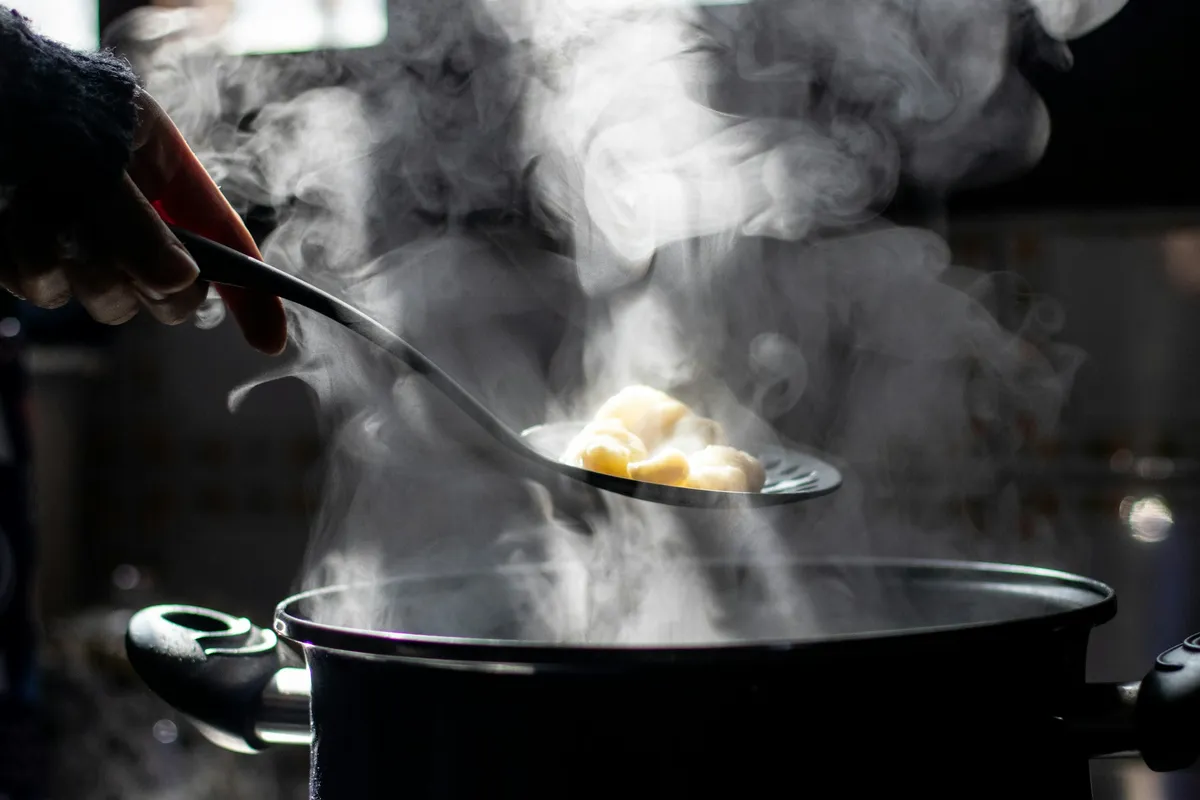
Cooling is where batch cooking quietly goes wrong. How long can a hot pot sit while you portion it? Less than you'd think. Bacteria multiply between 40F and 140F, and USDA's rule is blunt: refrigerate or freeze leftovers within 2 hours of cooking, or within 1 hour if the room is above 90F. Divide big pots of soup into shallow containers, because the middle cools slowly. Hot food can go straight into the refrigerator, or into an ice or cold water bath first.
Then freeze fast. FSIS says rapid freezing keeps ice crystals small, which means less drip after thawing. Food 2 inches thick should freeze solid in about 2 hours. Spread packages in a single layer, and stack them only once they're frozen.
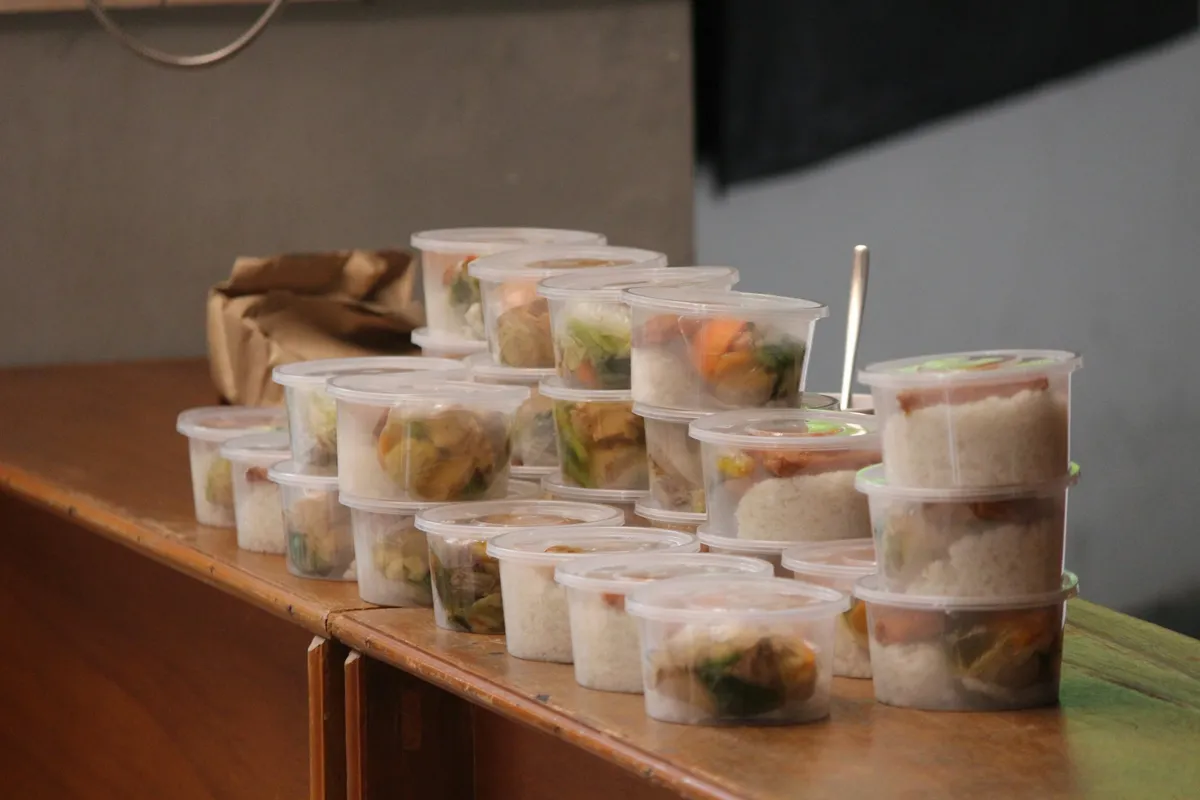
Air causes freezer burn, the grayish-brown leathery patches on food. It isn't unsafe, only dry, and you can cut it away. Heavy damage may justify tossing the food for quality. Use airtight containers or wrap. Keep a thermometer in the freezer. A fridge freezer compartment that can't hold 0F suits short-term storage only.
Date every package. Why bother? Because the limits are quality limits, and a mystery lump has no way to tell you its age.
What's the Safest Way to Thaw?
Never on the counter, in a garage, or in hot water. USDA lists three safe methods.
- Refrigerator. Slowest, safest. A pound of ground meat or boneless chicken takes a full day. Afterward, ground meat and poultry keep another day or two, and leftovers 3 to 4 days.
- Cold water. Use a leak-proof bag, change the water every 30 minutes, and expect about an hour for a pound and 2 to 3 hours for 3 to 4 pounds. Cook right away.
- Microwave. Fastest, but parts of the food start to warm. Cook it immediately.
Only fridge-thawed food can be refrozen as is. Cold-water and microwave thawing both mean cooking first.
How Do You Reheat Frozen Meals?
Short on time? USDA says frozen soups and stews can go into a saucepan or microwave, and casseroles and combination meals into the oven or microwave. Our one-pot chicken and rice is the kind of combination meal that second group describes. Reheating just takes longer.
The target never changes: 165F on a food thermometer. Bring soups, sauces and gravies to a rolling boil. Cover the dish, and in a microwave rotate it, because cold spots hide in dense food. Check the temperature in several places.
A Batch-Cooking Day That Respects the Clock
- Check the freezer reads 0F and clear a flat shelf.
- Cook to safe temperatures: 165F poultry, 160F ground meat, 145F steaks and roasts.
- Portion into shallow containers right away, so the 2-hour limit never gets close.
- Chill, seal airtight, and label with the dish and the date.
- Freeze in a single layer. Stack once solid.
- Move tomorrow's dinner to the fridge tonight.
For a shopping list and a fridge-first schedule, start with the $50 weekly meal prep plan.
Frozen food stays safe indefinitely. It just stops being worth eating.
Some will call dating every container fussy. It's the cheapest habit in the kitchen, and the only way a 0F freezer can tell you which pot to eat first.