
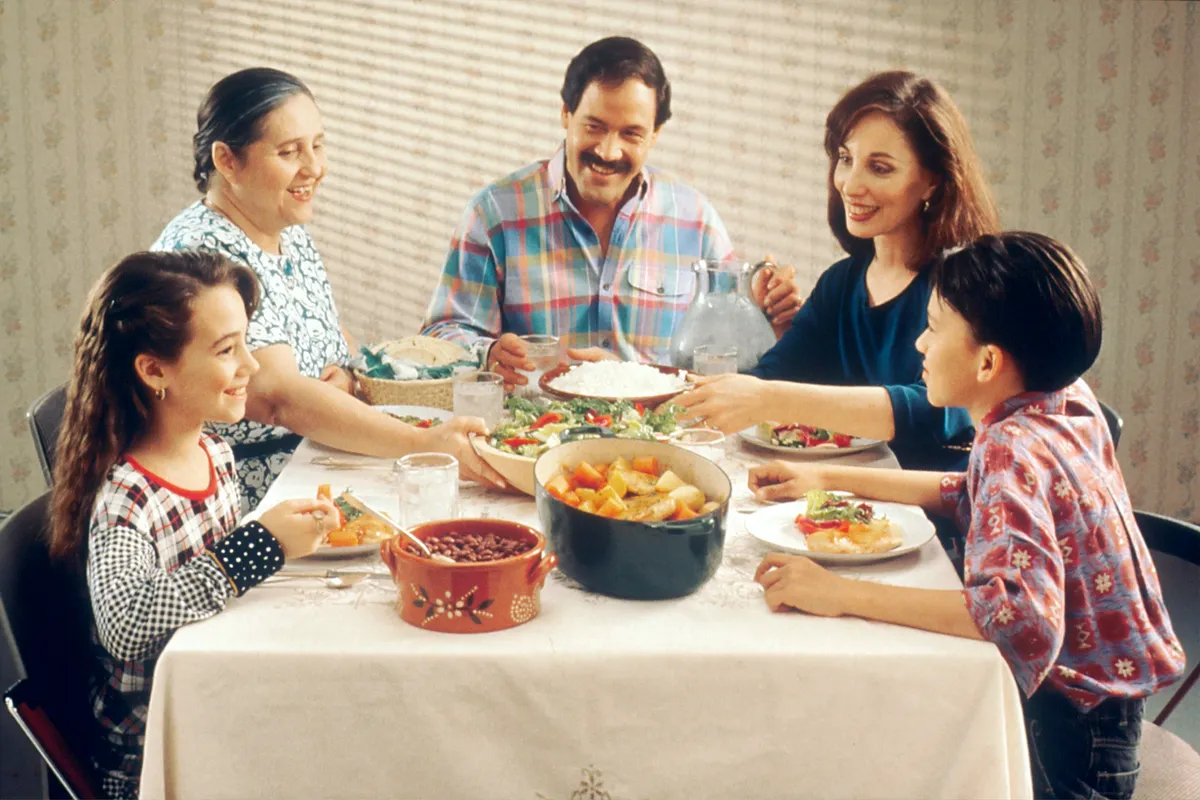
Half the table wants salad, one kid wants plain pasta, and it's 5:40 p.m. Most "healthy family dinner" advice fixes that by having you cook two meals. Don't. Federal nutrition guidance and the American Academy of Pediatrics (AAP) point at one meal that everybody can find something on.
We didn't cook or test these dinners for this page. Everything below is plate math from the Dietary Guidelines for Americans 2020-2025 and MyPlate, feeding rules from the AAP, and four plain formulas with temperatures from the USDA's safe-temperature chart.
TL;DR: Fill half the plate with fruit and vegetables, make half the grains whole, serve one meal with one familiar food on the table, and keep a 4 to 8 year old under 1,500 mg of sodium a day. Cook poultry and casseroles to 165F, ground beef and egg dishes to 160F.
Plate Math for a Family With Kids
MyPlate boils it down: make half your plate fruits and vegetables, make half your grains whole, vary your protein, and choose low-fat or fat-free dairy. Kid portions are smaller. The shape isn't. The Dietary Guidelines give daily targets by calorie level:
| Daily amount | Ages 2-8, 1,200 kcal | Ages 2-8, 1,400 kcal | Ages 9-13, 1,800 kcal |
|---|---|---|---|
| Vegetables | 1 1/2 cups | 1 1/2 cups | 2 1/2 cups |
| Fruit | 1 cup | 1 1/2 cups | 1 1/2 cups |
| Grains (whole) | 4 oz-eq (2) | 5 oz-eq (2 1/2) | 6 oz-eq (3) |
| Dairy | 2 1/2 cups | 2 1/2 cups | 3 cups |
| Protein foods | 3 oz-eq | 4 oz-eq | 5 oz-eq |
Those are whole-day totals, not dinner totals, and ages 5 through 8 need roughly 1,200 to 2,000 calories depending on sex and activity. One grain ounce-equivalent is 1/2 cup cooked rice or pasta, or a slice of bread. One protein ounce-equivalent is 1 ounce of meat, 1 egg, or 1/4 cup cooked beans.
Notice what's missing: a low-calorie target for kids. A lighter family dinner means more vegetables and less added fat in the same pan, not a smaller plate for a six-year-old. If a pediatrician has given your child a number, that number wins.
Four Dinner Formulas, No Recipe Card Needed
Each feeds four. Temperatures are USDA minimums.
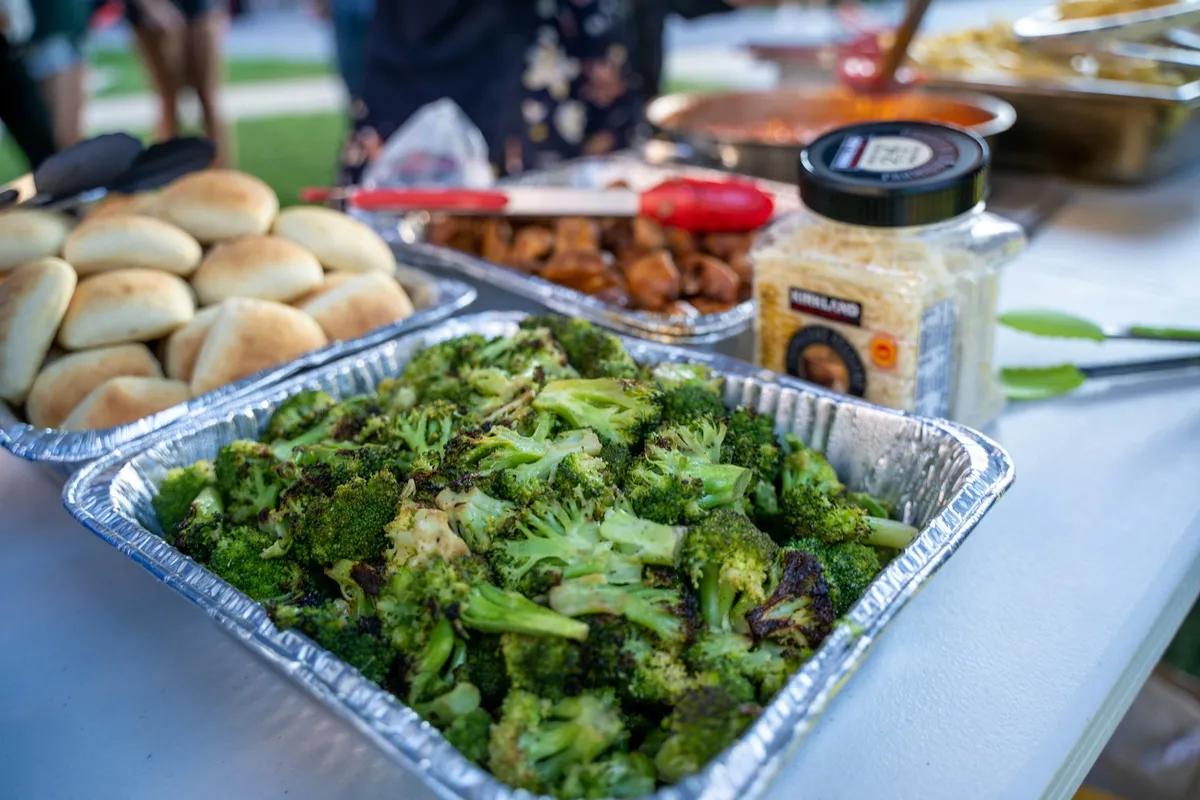
Sheet-pan chicken and broccoli. Toss 4 to 6 bone-in chicken thighs with oil, salt and pepper, and roast at 425F for 35 minutes. Add 1 pound of broccoli florets for the last 15. Pull the chicken at 165F or higher; our crispy baked chicken thighs method explains why 175F tastes better. Serve over 2 cups of cooked brown rice.
Build-your-own taco bowls. Brown 1 pound of 93% lean ground beef or turkey for 8 to 10 minutes, then stir in one 15-ounce can of no-salt-added black beans. Season with chili powder and cumin, not a salty packet. Beef needs 160F, turkey 165F. Put rice, lettuce, tomato, corn and cheese in separate bowls. The kid who only wants rice and cheese still eats dinner, and nobody cooked twice.
Veggie frittata. Whisk 8 eggs with 1/2 cup of milk. Soften 2 cups of chopped vegetables (spinach, peppers, thawed frozen mix) in a 10-inch oven-safe skillet, pour the eggs over, scatter on 1/2 cup of shredded cheese, and bake at 375F for 20 to 25 minutes. USDA lists egg dishes like frittata at 160F. Add whole-wheat toast and sliced fruit.
One-pot chicken and rice. Our one-pot chicken and rice takes 40 minutes; fold in a cup of frozen peas before the covered rest. Adults who want fewer carbs can use the low carb one pot meals.
Getting a Picky Kid to Eat It
The AAP's core advice is less work than a second dinner. Serve one meal for the whole family, resist making another if your child refuses it, and include at least one food your child likes. Then step back. Will that work on night one? Probably not. The AAP says it can take 10 or more tastes before a toddler accepts a food.
Moves the AAP and MyPlate back:
- Offer a choice of two healthy options.
- Let kids pick and help. A preschooler who chose the vegetable is likelier to try it.
- Pair new with familiar. The AAP's example is broccoli with grated cheese.
- Skip the bribes. Treats as prizes make the prize shinier and the vegetable a chore, and pressure can make kids dislike foods they'd otherwise eat.
- Hide a little. The AAP suggests grated zucchini and carrot in meat loaf, lasagna and soups. Keep real vegetables on the plate too.
Some parents will argue that plain pasta saves the evening. It does, once. Then it's the menu.
Salt, Sugar and the Grocery Bill
The Dietary Guidelines cap sodium at 1,200 mg a day for ages 1 through 3, 1,500 mg for ages 4 through 8, 1,800 mg for ages 9 through 13, and 2,300 mg after that. Americans aged 1 and up average 3,393 mg. Most of it comes from commercial processing and restaurant cooking, not your salt shaker, which is the case for cooking at home.
Added sugars should stay under 10 percent of calories starting at age 2, and zero before then. For a 1,400-calorie day that's under 140 calories, roughly 35 grams by our arithmetic. Check the Nutrition Facts label on sauces and yogurt.
Money is the other limit. MyPlate's budget tips line up with every formula above:
- Frozen vegetables without sauce, and canned ones labeled "no salt added," often cost less and last longer.
- Beans, peas and lentils cost less than other proteins. Eggs and canned tuna or salmon are cheap too.
- Stretch a pot by adding rice, beans or frozen vegetables, and double a recipe so you can freeze half.
Prices vary too much by store to print here; the $50 weekly meal prep plan has real numbers. Reheat leftovers to 165F.
Pick one formula this week. Keep one food everyone likes on the table. Then be boring about it for ten tries.