
Disclosure: This post carries no affiliate links and nothing in it is sponsored. I have not bought a combo unit, so everything below is drawn from published lab and hands-on tests by named outlets, with my own Cosori Pro LE as the reference point.
Somebody asked me last week whether one appliance could replace the microwave and the air fryer sitting side by side on their counter. Should you buy a microwave that air fries? Mostly no, and the published tests are unusually clear about why. But there is one kitchen where the trade makes sense, and it might be yours.
TL;DR: Combo microwaves do air fry, just slowly. Published tests put frozen fries at 11 to 21 minutes against roughly 6 in a basket machine, with visibly less browning. Buy one only if counter space is genuinely the binding constraint, judge it on its microwave scores, and check the Toshiba safety list before you order.
The Numbers Everybody Buries
Four outlets tested these units this year and none of them found a combo that keeps up on time.
| Source | Unit | Food | Time |
|---|---|---|---|
| TechRadar | Samsung Combi MC32DG7646CKE3 | frozen sweet potato fries | 11-12 min, still soggy |
| TechRadar | dedicated air fryer, same food | frozen sweet potato fries | about 6 min |
| Tom's Guide | IKEA GATEBO, $199 | frozen french fries | 21 min per IKEA's manual |
| Tom's Guide | IKEA GATEBO | chicken skewers | slower, less browned |
| Reviewed | Sharp 900W convection | chicken nuggets | nearly as crisp as a basket |
The Sharp row is the interesting one, because it's the exception that tells you what's going on. Nuggets are already coated in a dry breading engineered to crisp in an oven. Feed a combo something that has to build its own crust and the gap opens back up.
Tom's Guide's own wording on the GATEBO fries is the honest version of what every one of these does: after 10 minutes they were soggy, and after another 11 they were sizzling and evenly cooked. That's a decent result. It's also 21 minutes for a side dish.
Why It Can't Be Fixed With Firmware
Two physical reasons, and knowing them tells you which foods to attempt.
A microwave cavity is a humid box. Its whole job for forty years has been to drive water out of food and keep it in the cavity, and a dry crust needs the opposite. Combos vent, but they're venting a shape that was never designed to stay dry.
Then there's airflow. A basket air fryer sits your food on a mesh so hot air moves under and through it. A combo sits it on a flat tray, sometimes over a solid plate at the base of the cavity, so the top browns while the underside steams in its own moisture. Flip halfway and you get two half-browned sides instead of one crisp surface. Some models also cap out at 200C, under the 205C a lot of published air fryer times assume.
Preheating costs you too. Reviewers have clocked over three and a half minutes before the timer even starts, against the two to three minutes my cook times chart is built around.
Buy One Anyway If This Is You
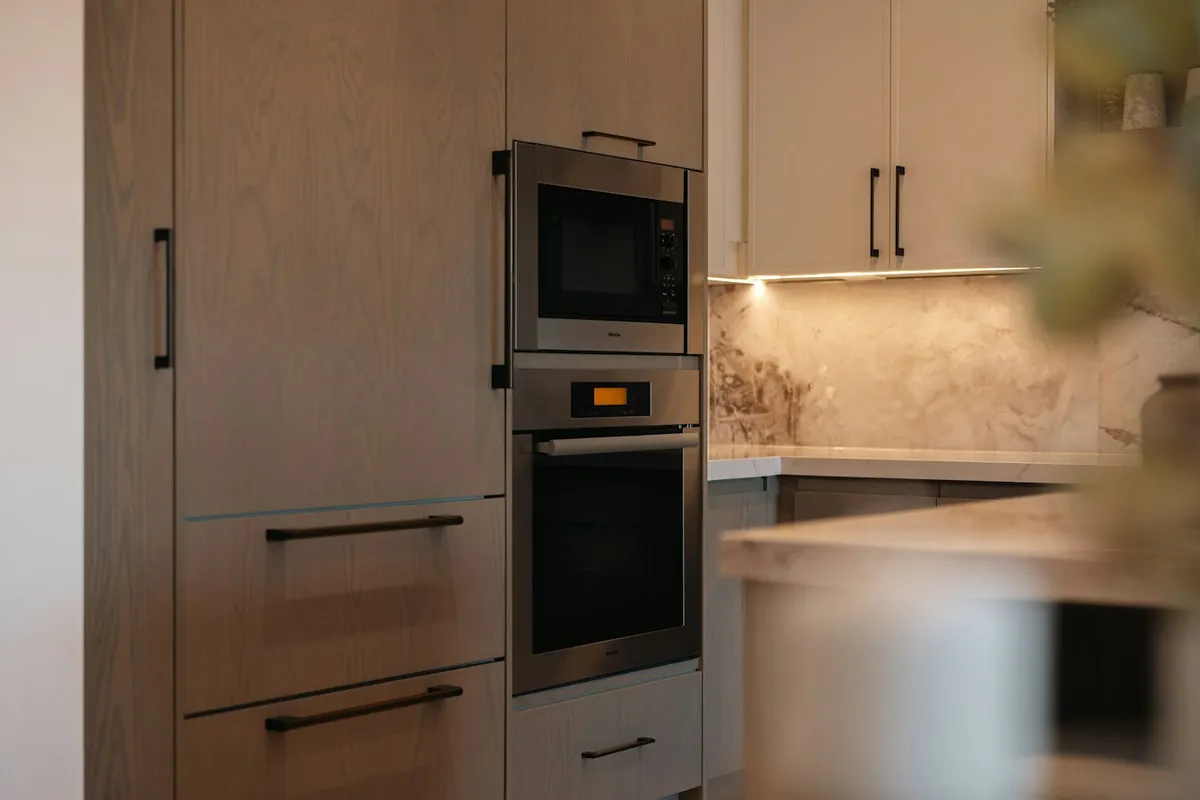
I'd still recommend a combo over two machines in exactly three situations. A galley kitchen or a dorm where one appliance slot is the hard limit. A rental where the landlord supplies the range and you're not buying a second box. Or a household that microwaves daily and air fries twice a month, which is more people than the internet admits.
What you're buying in those cases is a microwave. So shop it as one. Consumer Reports rated the PowerXL Microwave Air Fryer Plus mediocre at heat evenness on reheated mashed potatoes but very good at defrosting a pound of frozen ground beef, and that split is the category in miniature. A combo that reheats unevenly will annoy you every single day, while a slow air fry mode annoys you on Saturdays.
Two more things the spec sheet won't volunteer. Combos are noisier than basket machines, which matters in a studio. And wet batter is a genuine mess in a shared cavity, so keep the beer-battered anything for a real fryer.
The Safety Note, Because It Is Current
This one is the reason I wrote the post today rather than next month. Consumer Reports reported 28 incidents filed with the CPSC between January 2023 and April 2026 involving certain Toshiba-branded microwaves, air fryer combos among them, starting on their own or adding cooking time unprompted, with reports of overheating, sparks and smoke.
The named models are ML2-EC10SA, ML2-EC10SA(BS), ML2-EC09SA, EM131A5C and EM925A5A-SS. Midea, which manufactures them, said it found no evidence the issue poses a safety risk and that any effect is contained inside the unit, while acknowledging the power button can stick. It offers free evaluation and service on 866-646-4332. No CPSC action has been announced, and the units remain on sale at the usual retailers.
Here's my opinion, and you're free to disagree: a manufacturer conceding that the power button sticks and then telling you nothing unsafe follows from that is not a sentence I want to hear about an appliance that makes heat. Toshiba combos are the ones the affiliate roundups love. Check your model number against that list before you buy, and if you already own one, unplug it when you're done with it.
What I'd Actually Do
Two machines if you have the room. A 1,400W basket air fryer and a plain, well-rated microwave cost less together than most 3-in-1 units and each does its one job properly.
One machine if you don't. Pick it on microwave heat evenness and defrost scores, expect roughly double the air fry times you see in recipes written for baskets, and start with pre-breaded frozen food while you learn the thing. My six-minute fries are not coming out of a combo. Fifteen-minute fries in a kitchen that only has room for one box still beats no fries at all.