
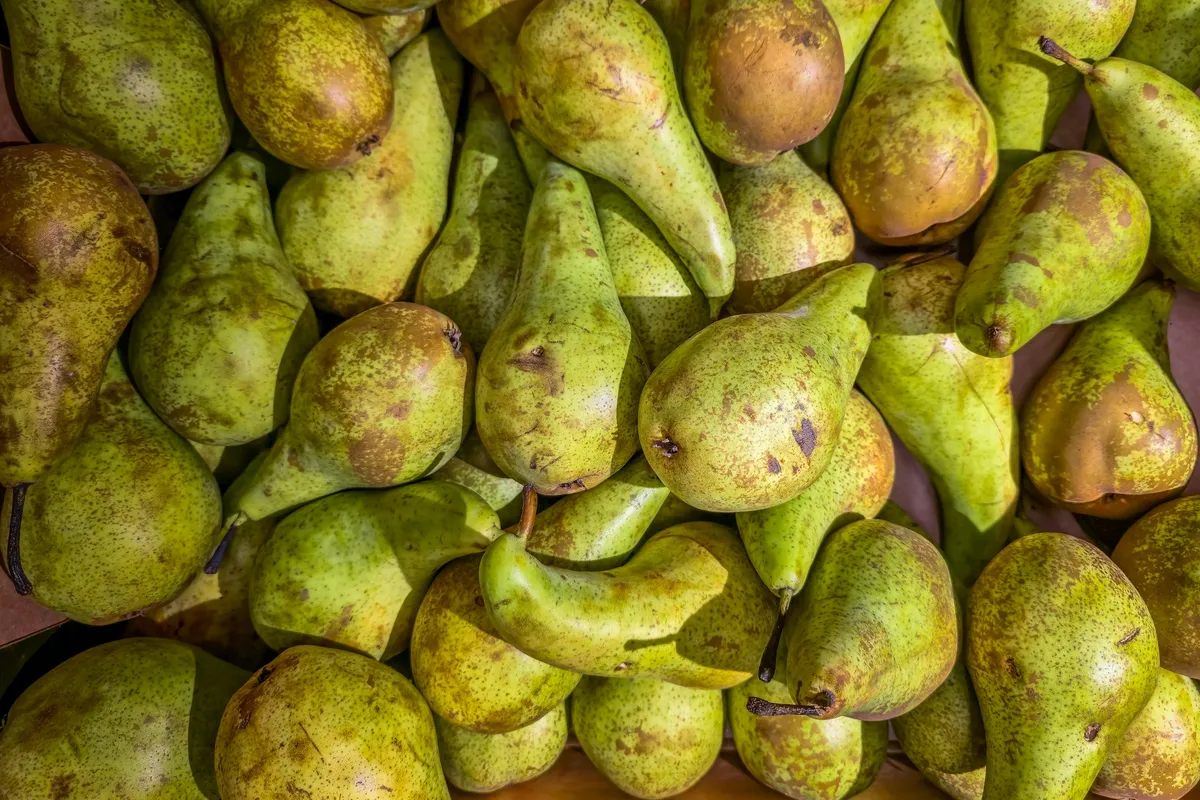
TL;DR: USDA's October 2, 2026 grocery ad survey put Bartlett pears at $1.79 a pound (up 17 percent on last year), Bosc at $1.75, D'Anjou at $1.89 and red pears at $1.61. Buy them hard, ripen them on the counter for four to seven days, and judge ripeness by pressing the neck. Roast Bosc, eat Bartlett raw.
Pears are the one fruit the store sells you unfinished. On purpose.
Every other fruit in the October display is as ripe as it's going to get. Not pears. They're picked hard, shipped hard, and stacked hard, and the work of turning them into something worth eating is handed to you at the register. Most people don't know that, buy a rock, bite it two days later, and conclude they don't like pears.
They like pears. They just skipped a step.
What pears cost this week, and why Bartletts jumped
The numbers below come from the USDA's National Retail Report for specialty crops dated October 2, 2026, covering ads that run between September 26 and October 8. It's a survey of 299,382 grocery ads nationwide, not a shelf-tag audit, so it tells you what retailers are promoting. In the first week of October, that's pears.
| Variety | Advertised avg | Ads counted | Same week 2025 |
|---|---|---|---|
| Bartlett, per lb | $1.79 | 6,079 | $1.53 |
| Bosc, per lb | $1.75 | 1,511 | $1.57 |
| D'Anjou, per lb | $1.89 | 590 | $1.72 |
| Red pears, per lb | $1.61 | 2,257 | $1.52 |
| Bartlett, 2 lb bag | $3.98 | 187 | not listed |
Bartlett is the headline. A 17 percent jump year over year is big enough that the report named it among the week's significant increases, alongside blueberries. Why? The report doesn't say, and I won't guess at crop reports I haven't read. What the table does show is that Bosc is now four cents cheaper than Bartlett on average, which almost never happens this early in the season, and Bosc is the better cooking pear anyway.
Regional spread is wide. Bartlett ads ran from 69 cents a pound in one region to $2.77 in another, with a $3.87 outlier on four ads. The 2 lb bag works out to $1.99 a pound, so this week the bag is not the bargain. Loose pears are.
For context against the rest of the fall table: Gala apples averaged $1.39 a pound in the same survey, Honeycrisp $2.00, butternut squash $1.06, sweet potatoes $1.56, and fresh cranberries $3.09 for a 12 oz bag. Pears sit above squash and below the premium apple. The September produce guide had Bartletts at $2.38 to $3.00 a pound three weeks ago, so if you were waiting, this is the drop.
Why the store sells them hard
Here's the part the price table can't tell you. Pears ripen from the inside out. Oregon State University Extension's fact sheet on picking and storing pears puts it plainly: pears ripen from the core outward and from the neck toward the base, and a pear left to ripen on the tree develops a coarse, mealy texture while the core breaks down.
So growers pick them mature but hard. For Bartlett and Bosc that's the whole story. For winter pears it gets stranger: D'Anjou needs about two months of cold storage before it will ripen properly, and Comice needs about a month. Without that chill they just sit there. The pears in your store have already had it, which is why a D'Anjou bought in October will soften on your counter and one picked off a backyard tree in October won't.
A pear that ripened on the tree is a worse pear. Buy them hard and let the counter do the work.
How to ripen pears without guessing
Leave them on the counter. That's most of it. USA Pears, the Pear Bureau Northwest's consumer site, says pears need to ripen at room temperature and won't ripen properly in the fridge. Oregon State gives the range as 60 to 70 F and the time as three to ten days.
That's a wide window, so here's the variety breakdown from University of Wyoming Extension:
- Bartlett: four to five days. It also changes color, green to yellow, so you can see it happening.
- Bosc and Comice: five to seven days. No meaningful color change at all. Bosc stays brown and russeted whether it's ripe or raw.
- Anjou, Concorde, Seckel, Starkrimson, Forelle: slight color change at most, per USA Pears. Judge by touch.
Check the neck, not the belly
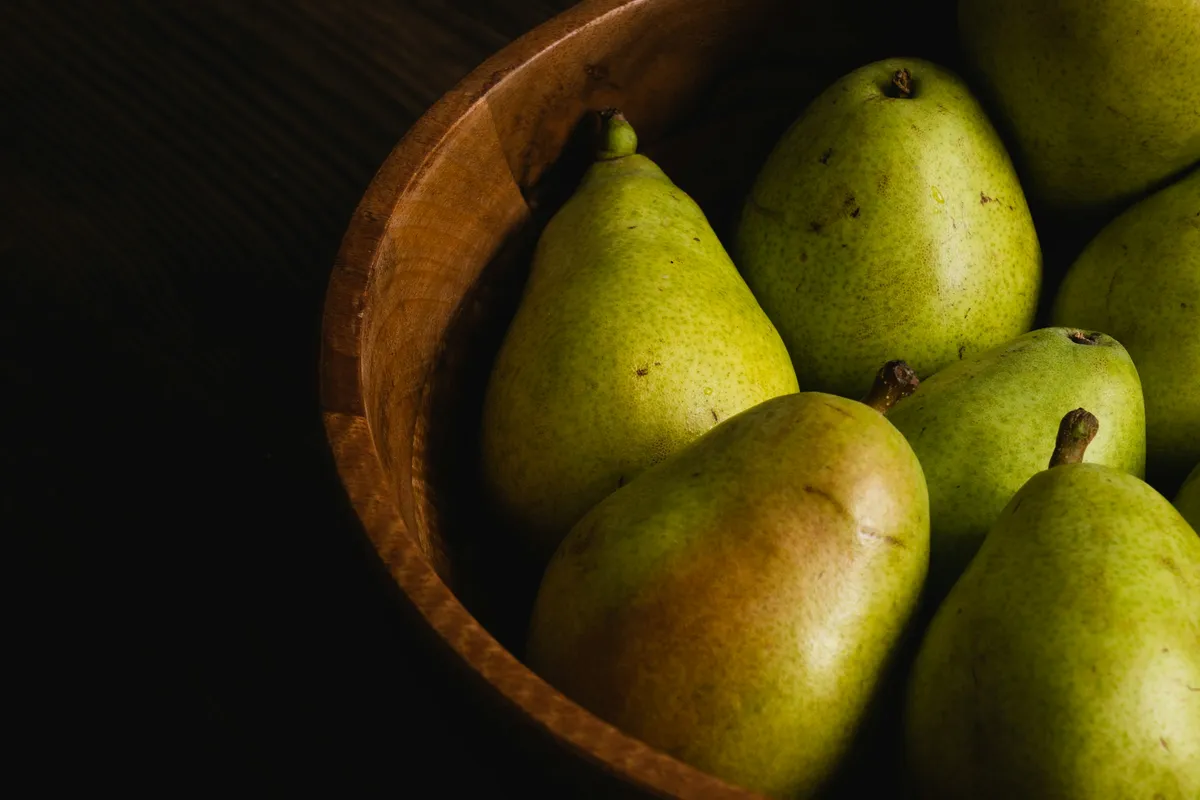
This is the single most useful thing in this article. Because the pear ripens from the core out, the flesh around the stem goes soft first. Press there with your thumb. When it yields to gentle pressure, eat it. If you wait until the fat part of the pear feels soft, the inside is already past it.
Is a paper bag worth bothering with? Yes, if you're in a hurry. Ripening fruit gives off ethylene, and the bag traps it. Add a banana or an apple and you've roughly doubled the gas. Check the bag every day though. A Bartlett at day four is lovely and at day six is compost.
Once a pear is ripe, the fridge becomes your friend instead of your enemy. USA Pears says ripened pears keep three to five days refrigerated. So the system is: counter until the neck gives, then fridge, then eat within the week.
What's actually in a pear
The USDA's FoodData Central entry for raw Bartlett pears lists, per 100 grams, 84.1 g water, 57 calories, 15.1 g carbohydrate, 3.1 g fiber, 9.69 g sugars, 4.4 mg vitamin C and 87 mg potassium. Scale that to a medium pear and you land where the extension services do: about 100 calories and around 6 grams of fiber, which Wyoming Extension puts at 24 percent of the daily value.
Ohio State's pear fact sheet adds the kitchen math: a pound is two or three medium pears, or about two cups sliced. At this week's Bosc average, one medium pear costs roughly 69 cents. That's the fruit cost of one serving of the recipe below, before butter and honey.
Skillet-roasted pears, and why the skillet matters
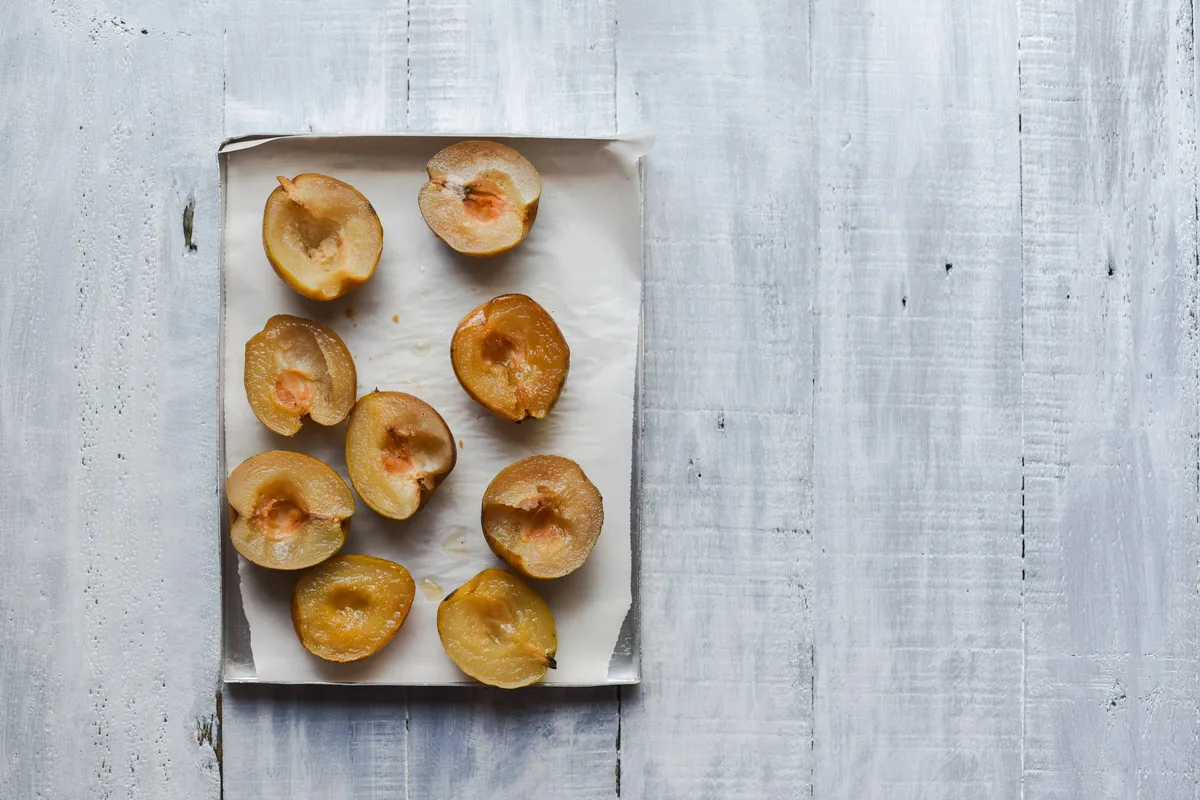
Roasting a pear is easy. Roasting one that browns instead of slumping into syrup takes one extra step, and America's Test Kitchen's method is the clearest explanation of why. Their roasted pears recipe starts the halved pears cut side down in a skillet on the stovetop for three to five minutes before the pan goes into a 450 F oven. The point is to boil off the juice the fruit releases on contact with heat, because that liquid is what stops caramelization. Then 15 minutes in the oven, a flip, and 10 to 15 more.
This blog's version keeps that structure and borrows the seasoning from Sally Schneider's roasted pears in The Improvisational Cook: lemon juice, vanilla, a little sugar, butter. Full steps are in the recipe card above. The headline decisions:
Use Bosc. ATK calls for it, with Comice and Bartlett as fallbacks. Bosc is denser and drier, so it keeps its shape. A ripe Bartlett is a wonderful thing raw and a frustrating thing roasted.
Pick pears that give slightly at the neck, no more. Fully ripe ones collapse. Rock-hard ones stay chalky in the middle even after 30 minutes. Day three or four of counter ripening is about right for Bosc.
Don't move them during the stovetop sear. The browning happens where fruit meets hot metal. Nudge them and you reset it.
Cast iron is the obvious pan here, and a well-seasoned one releases the pears cleanly. If yours has gone dull and sticky, the cast iron seasoning guide is a 45-minute fix. Any ovensafe stainless skillet works too. Nonstick doesn't belong in a 450 F oven, so skip it.
The nutrition figures in the frontmatter are calculated from USDA FoodData Central values for Bartlett pear, butter and honey, rounded, for one pear per serving. Actual numbers shift with pear size and how much glaze you spoon on. Swapping honey for brown sugar is a straight trade here; the baking substitutions chart covers the cases where it isn't.
Where October pear cooking goes wrong
Buying ripe pears to cook. Backwards. For roasting or baking you want them a day or two short of eating-ripe, and for a tart or a cake you can go firmer still.
Refrigerating hard pears. They'll sit there for weeks and never soften, then rot from the inside once they finally come out. Counter first.
Peeling with a dull knife. Pear skin is thin and the flesh bruises. A sharp peeler or paring knife matters more than technique; the knife skills basics cover grip and safety.
Treating all pears as one fruit. A Bosc and a Bartlett bought the same day will be ready two days apart and want different jobs. Buy both, label nothing, and you'll eat one too early and roast the other too late.
Here's the honest take. Pears are a slightly annoying fruit, and that's why they're underbought. Apples ask nothing of you. Pears ask for four days and a thumb. The payoff is that an October Bosc, ripened properly and roasted hot, is better than any apple dessert you'll make this month, and I'll stand by that even in apple season. Squash is cheaper, sure, and there's a whole piece on squash beyond soup. But squash doesn't get sweeter while you wait. Pears do.