
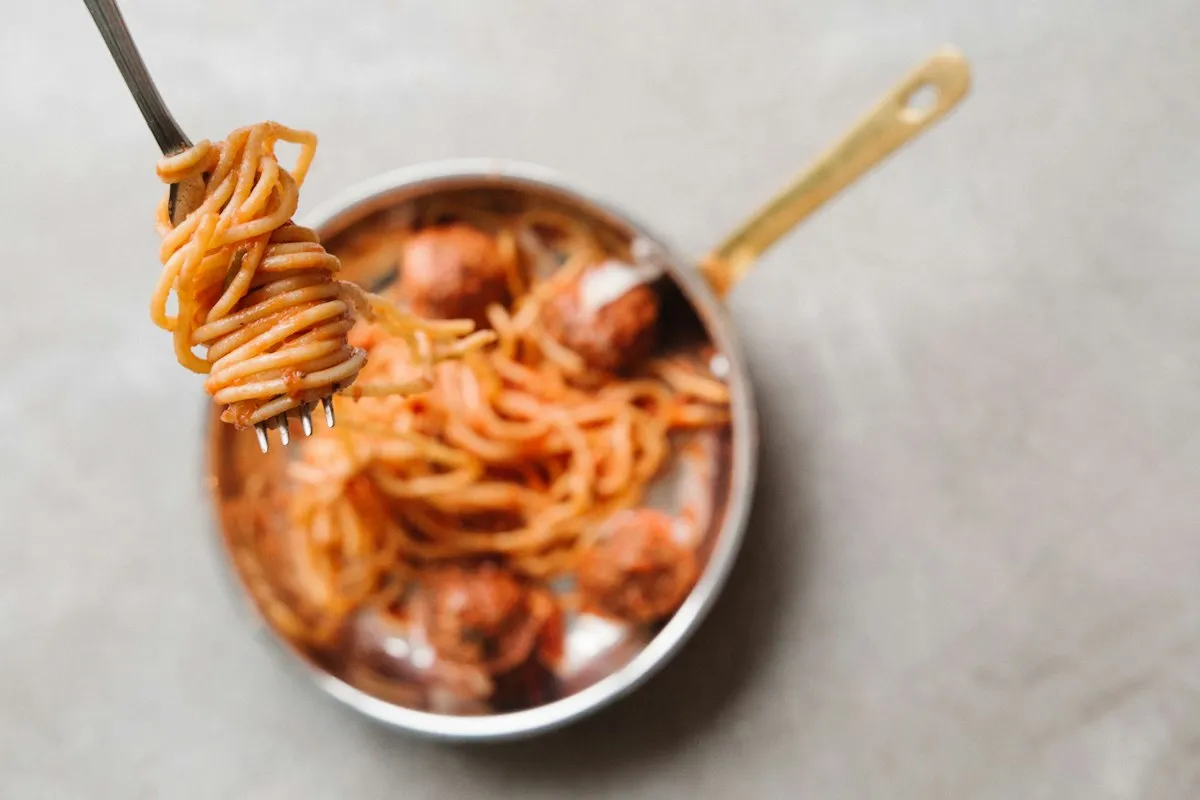
Most easy weeknight dinner lists hand you twenty recipes. You need three habits. A formula you can run on autopilot, a pasta routine that doesn't end in gluey noodles, and a sheet pan where the vegetables don't burn while the meat catches up.
We didn't cook or test these methods for this page. The numbers come from University of Illinois Extension, Texas A&M AgriLife Extension, the CDC's temperature guidance, and pasta guides from The Modern Proper, Tasting Table and Blue Apron. Where a source gives a range, you get the range.
TL;DR: Pick one protein, one vegetable, one starch, one fat and one flavor. Boil pasta in 4 quarts of salted water per pound, pull it 1 to 4 minutes early, and finish it in the sauce with a splash of pasta water. Roast sheet pans at 400 to 425F, longest-cooking food first.
The Five-Ingredient Formula
University of Illinois Extension builds a sheet pan supper from a base protein, vegetables, about 2 tablespoons of oil and a flavor mixture of herbs, spices or sauce, with an optional starch. Split those into slots and you get five. Salt and pepper don't count.
| Slot | Pick one | What it does |
|---|---|---|
| Protein | Chicken, tofu, fish, turkey meatballs or chickpeas | Sets the cooking time and the safe temperature |
| Vegetable | Whatever is cheapest this week | Color, bulk and the pan's browning |
| Starch | Pasta, potatoes or rice | Makes it a meal |
| Fat | About 2 tablespoons of oil, or butter in a pan | Carries flavor and browns the edges |
| Flavor | A sauce, spice blend, herbs or lemon | Does the job a recipe would |
Why does a formula beat a recipe? Because the swap is the point. Chickpeas for chicken, broccoli for cabbage, rice for potatoes, and nothing needs relearning. Our September produce price guide shows which vegetables are worth buying right now.
Here's the opinion you can argue with: a dinner that needs a new recipe card every night isn't a weeknight dinner, it's a hobby.
The Pasta Method: Salt, Save, Finish in the Pan
Where do pasta dinners go wrong? In three places: unsalted water, a drained-and-forgotten pot, and sauce poured on top of finished noodles. The fixes are cheap.
- Use a big pot and salt it. The Modern Proper calls for 4 quarts of water per pound of pasta and 1 tablespoon of kosher or sea salt per pound, 1 1/2 tablespoons for Diamond Crystal. Salt goes in once the water boils.
- Start the sauce first. Get it simmering in a wide pan while the water heats.
- Pull the pasta early. Tasting Table splits the job roughly 70 percent in water and 30 percent in sauce, so the pasta comes out 1 to 4 minutes before the package time. Blue Apron says 90 percent cooked. Our garlic butter shrimp pasta lands in the middle at 90 seconds early.
- Save at least 1 cup of the water before you drain.
- Finish in the sauce. Tip the pasta into the simmering pan and add the pasta water 1 to 2 tablespoons at a time. Tasting Table puts the finish at 1 to 2 minutes, until the pasta is easy to bite through but not stiff.
Sauce amounts matter too. Tasting Table suggests about 1 1/2 cups of tomato-based sauce per pound of pasta, or 1 cup of cream-based sauce.
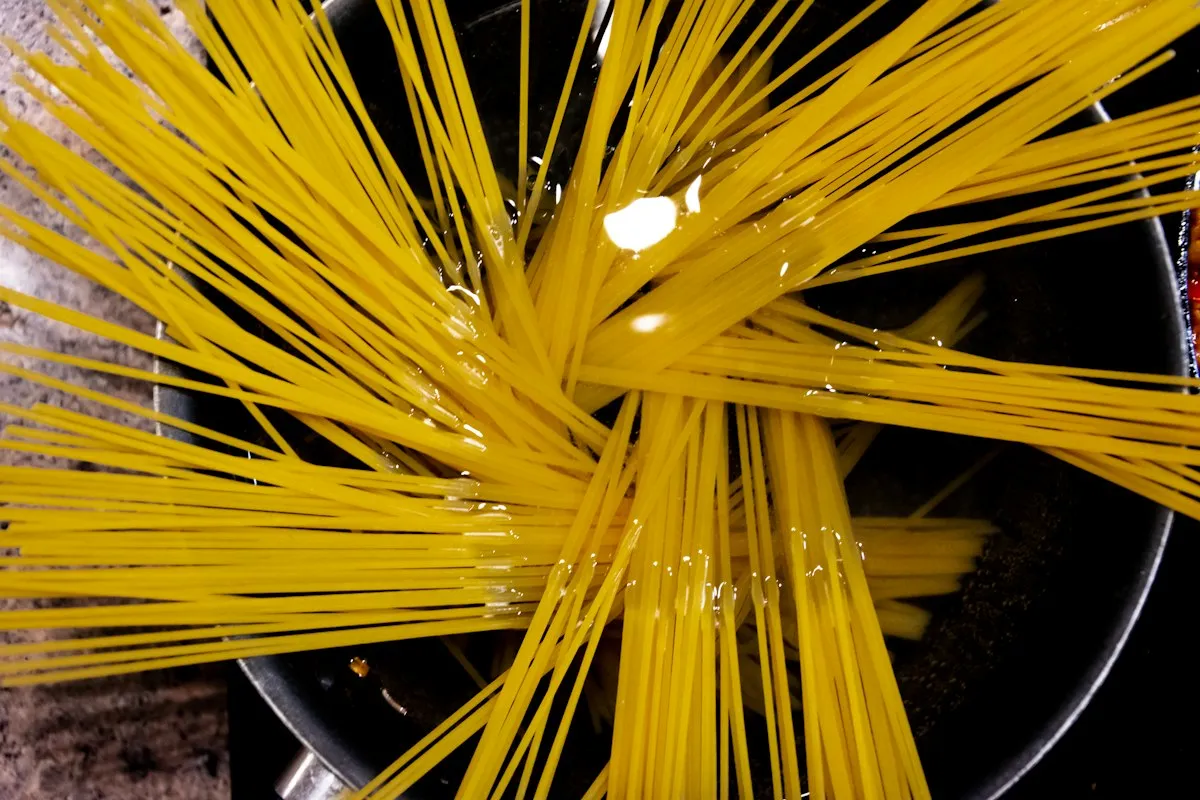
The reason is starch. America's Test Kitchen notes that the starch shed while pasta simmers thickens the sauce, so it clings. Tasting Table adds that the starch helps fat and acid emulsify into a creamier coating. Skip the saved water and you lose both effects.
The Sheet Pan Method: Stagger, Don't Crowd
Hardware first. Illinois Extension specifies a sheet pan with a 1-inch rim, and Texas A&M's pancake recipe names an 18x13 inch baking sheet, a half sheet. A rim keeps juices and oil in the pan and out of your oven.
Heat comes next. Illinois preheats to 425F. Texas A&M's gnocchi and pork chop sheet pans bake at 400F. Pick one of those two numbers and keep it; the timing fix is staggering, not turning the dial.
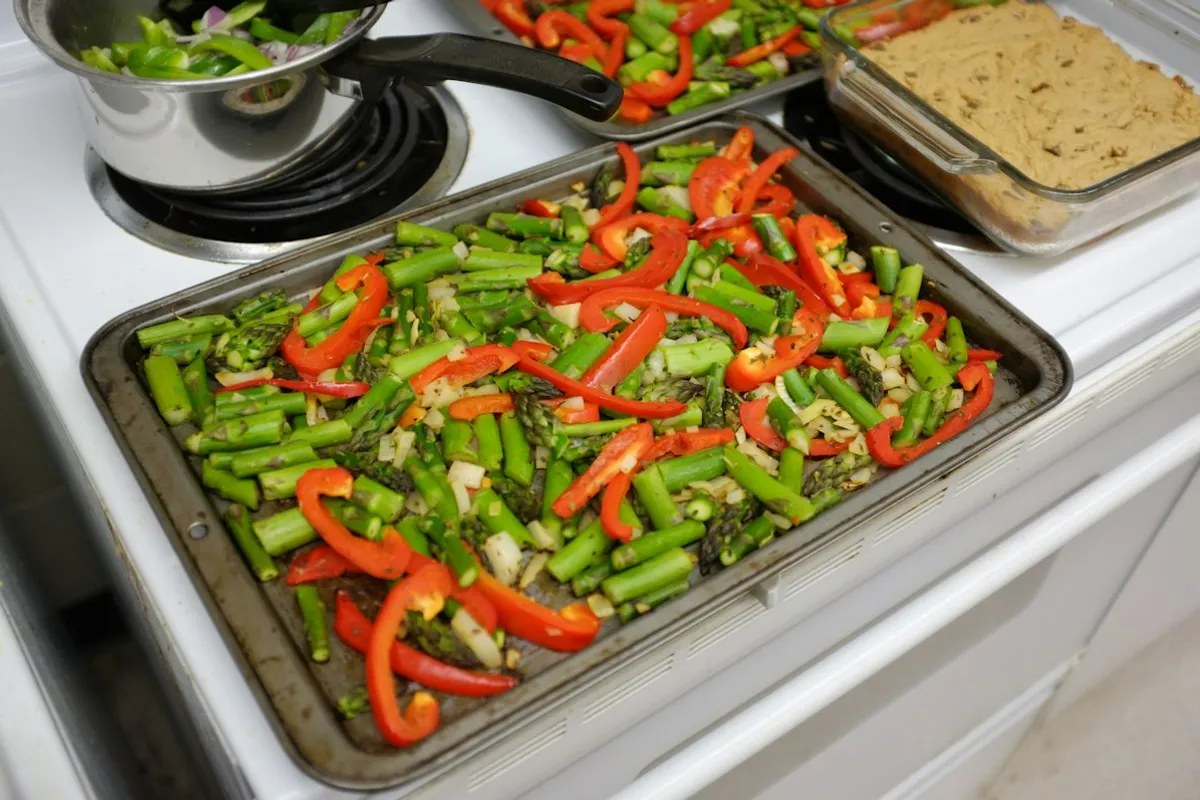
Illinois Extension's staggering rule is the useful part. Raw meat and firm vegetables such as potatoes, carrots and yams go in first. Tender ones, such as peppers, tomatoes and onions, join about halfway through so they don't burn. A full pan takes 30 to 45 minutes, with meat and potatoes needing about 45 and tender vegetables with plant-based proteins about 15 to 20. Texas A&M's gnocchi pan gets stirred at the 10-minute mark, then bakes 10 more.
Timing guides tell you when to look. Is it actually done, though? Only a thermometer answers that. The CDC's minimums are 165F for all poultry, including ground chicken and turkey, 160F for ground beef and pork, and 145F plus a 3-minute rest for steaks and chops. Fish needs 145F, and leftovers and casseroles need reheating to 165F. For thighs that taste better past the minimum, see our crispy baked chicken thighs method.
Want worked examples with quantities? Our healthy family dinner formulas cover sheet-pan chicken and broccoli, taco bowls, frittata and one-pot rice with kid-friendly portions.
Pick one slot to change this week, the vegetable maybe, and leave the other four alone. If you want groceries sorted around the same repeats, the $50 meal prep plan shows the shopping math.